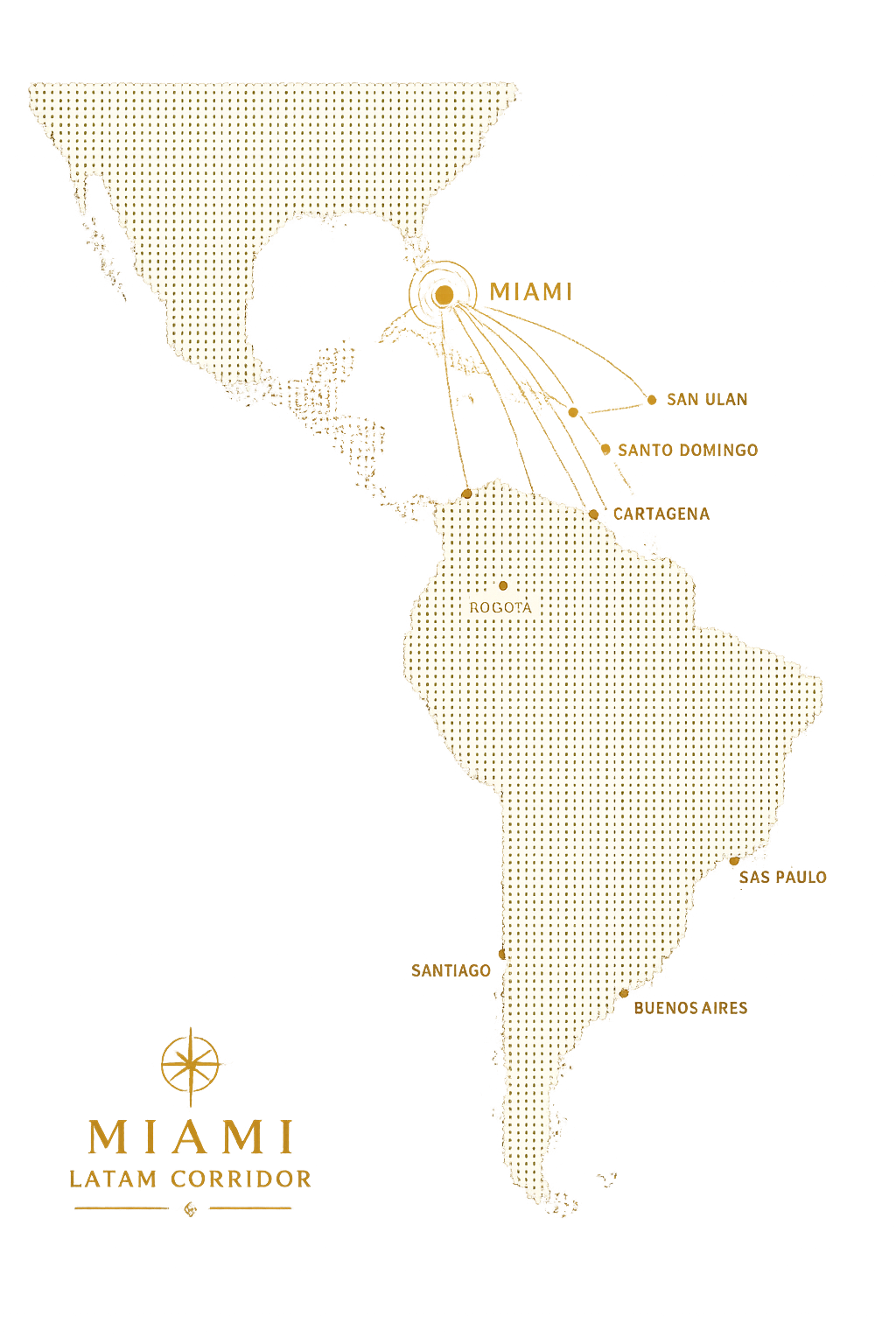

Washington is accelerating hemispheric consolidation ahead of renewed U.S.–China negotiations, repositioning South Florida as the diplomatic and capital command node of the Western Hemisphere.
Key Facts
- A high-level U.S.–Latin America summit is scheduled in Florida, convening regional heads of state and senior ministers ahead of formal U.S.–China diplomatic engagement.
- U.S. policymakers have publicly increased scrutiny of Chinese infrastructure and telecommunications investments across LATAM.
- Chinese capital exposure in Latin America now exceeds $150B in cumulative loans and infrastructure commitments over the past decade.
- South Florida continues to serve as the primary banking and legal processing hub for LATAM inbound capital flows.
- Legislative momentum in Washington signals tighter compliance enforcement for cross-border financial transfers linked to strategic sectors.
Strategic Context
This summit is not ceremonial. It is sequencing.
The United States is consolidating hemispheric alignment before entering a new phase of economic negotiation with Beijing. The message is clear: Latin America is no longer neutral terrain. Infrastructure, ports, telecom networks, and energy corridors are being reframed as strategic assets, not commercial ventures.
For capital allocators operating across the Miami–São Paulo–Bogotá axis, this introduces a recalibration of Jurisdictional Sovereignty. Assets tied to Chinese-backed projects may face increased regulatory friction, enhanced compliance reviews, or preferential shifts toward U.S.-aligned financing vehicles. Miami’s role intensifies—not as a lifestyle city, but as a geopolitical clearinghouse.
As federal oversight expands, so does scrutiny of capital provenance, beneficial ownership structures, and sector exposure. The corridor is tightening.
The Interpretation
Most operators will interpret this as diplomatic theater. It is not.
When geopolitical blocs harden, legal frameworks follow. Banking compliance standards, export controls, and foreign investment reviews will likely synchronize across U.S.-aligned jurisdictions. That compresses flexibility for capital embedded in dual-aligned projects.
The hidden leverage lies in anticipatory structuring. Operators positioned within U.S.-compliant vehicles, insulated through clean ownership transparency and diversified asset bases, will gain preferential banking access and reduced friction. Those exposed to politically sensitive infrastructure plays may encounter liquidity drag.
The asymmetry favors the prepared.
The Sovereign Move
Reassess exposure to assets or partnerships materially tied to Chinese state-backed financing in LATAM. Formalize ownership structures to withstand enhanced regulatory review. Anchor liquidity within U.S.-aligned jurisdictions—particularly Florida entities benefiting from robust asset protection statutes and favorable tax design.
This is not about politics.
It is about positioning capital inside the winning legal architecture before the architecture hardens.