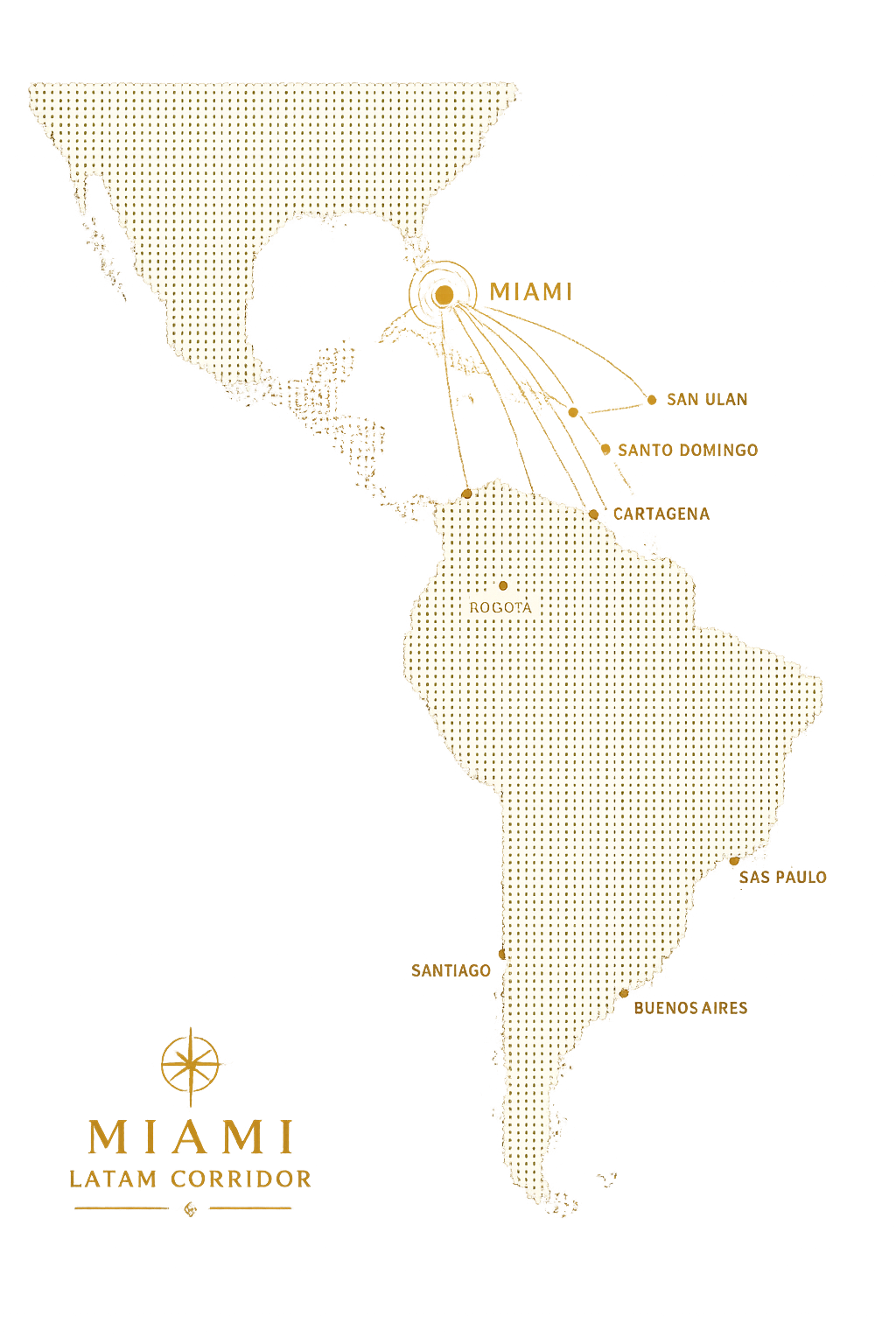

Orbital, a payments and treasury infrastructure company that connects traditional banking systems with digital asset settlement networks, announced that Miami will serve as the base for its U.S. expansion. The company provides cross-border payment services, foreign exchange capabilities, treasury management tools, and stablecoin-enabled settlement infrastructure for businesses operating internationally.
As part of its expansion strategy, Orbital plans to establish a regulated U.S. presence and pursue the licenses required to operate within the American financial system. The company cited increasing demand for faster, more efficient cross-border payment infrastructure as businesses seek alternatives to traditional settlement networks.
The announcement is notable because Orbital selected Miami rather than a traditional financial center such as New York. The move places a company focused on moving money across borders directly inside one of the most important gateways connecting U.S. and Latin American financial activity.
THE SIGNAL
Companies building the infrastructure that facilitates international capital movement increasingly view Miami as a strategic operating center for cross-border financial activity.
THE ANGLE
Most readers will view Orbital’s announcement as another fintech expansion into South Florida.
The more important development is where the company sits within the financial system. Orbital is not a wealth manager, a private bank, or an investment platform. Its business is the movement of money itself. The company’s products are designed to help businesses transfer, settle, and manage capital across jurisdictions more efficiently. When firms operating at this layer of the financial stack choose a location, they are making a decision about where they expect transaction volume, client demand, and financial activity to develop.
For years, Miami’s competitive advantage was largely based on attracting capital after it arrived. Private banks, family offices, and wealth managers established operations to serve Latin American wealth entering the United States. Orbital’s decision reflects a different stage of evolution. The city is increasingly attracting firms that facilitate financial transactions rather than simply manage assets.
The significance extends beyond one company. Payment infrastructure, treasury technology, and settlement networks are foundational components of modern capital flows. As these businesses cluster in a market, they create an ecosystem that can support greater cross-border activity. Orbital’s expansion suggests that Miami is becoming part of the operating infrastructure of international finance rather than solely a destination for capital.
WHY IT MATTERS FOR MIAMI–LATAM
Miami’s role in Latin American finance has historically been tied to wealth preservation, investment access, and private banking services. The arrival of firms like Orbital points toward a broader role that includes the movement and settlement of capital itself.
For private banks, family offices, and wealth managers serving Latin American clients, expanded payment and treasury infrastructure can improve how capital is transferred, deployed, and managed across jurisdictions. For Latin American businesses and investors, it creates additional access points into U.S. financial markets through platforms designed specifically for cross-border activity.
The long-term implication is that Miami’s importance may increasingly derive from the financial infrastructure it hosts rather than solely the assets it attracts. Infrastructure creates connectivity, and connectivity often attracts additional capital, institutions, and transaction volume.
WHAT WE’RE WATCHING
- Orbital’s progress toward obtaining U.S. regulatory approvals and operating licenses.
- Additional payment, treasury, and settlement infrastructure firms establishing operations in Miami.
- Adoption of new cross-border settlement networks by private banks, family offices, and internationally active businesses.