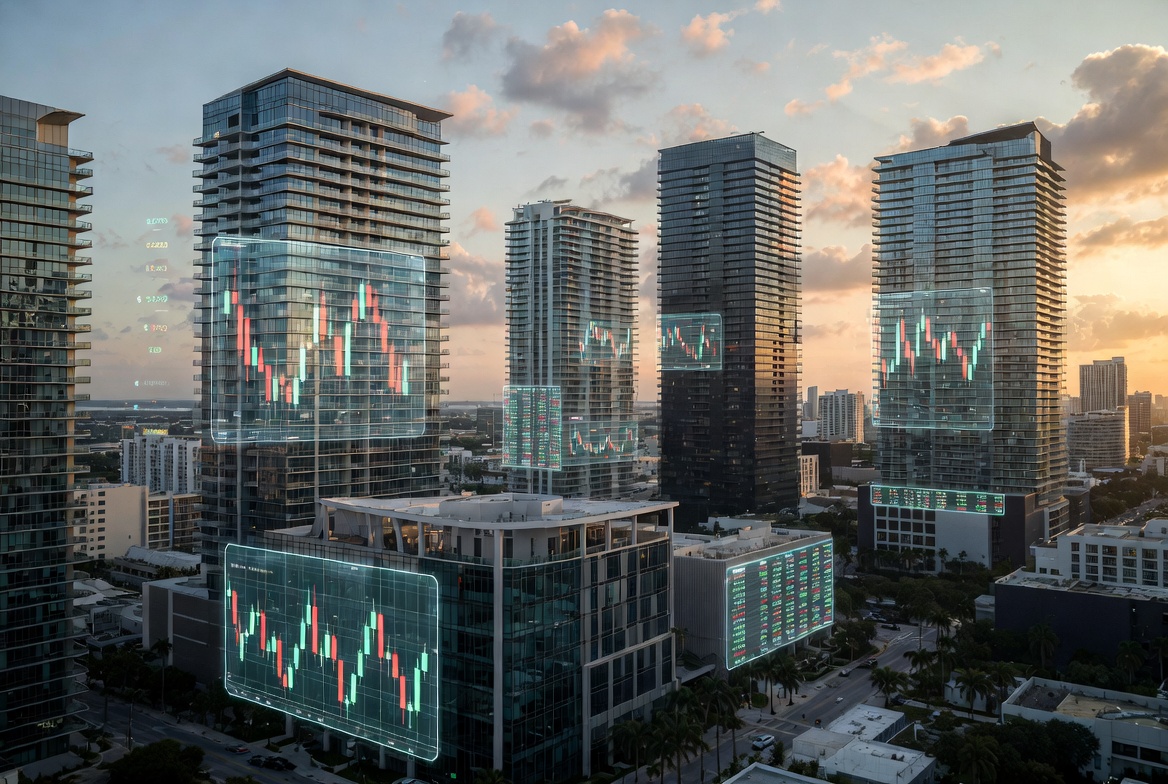


Citadel CEO Ken Griffin confirmed the firm is “doubling down” on Miami operations, including revisions to expand the company’s planned office footprint in the city.
How Mamdani Turned Miami Into Wall Street’s Emergency Exit
SIGNAL
The announcement reinforces Miami’s ongoing institutional transition from tax-arbitrage destination into a permanent operating center for global capital allocators. Citadel’s expansion is particularly significant because it represents operational infrastructure investment rather than temporary relocation activity.
STRATEGIC CONTEXT
Since 2020, Miami has increasingly evolved into a secondary command center for hedge funds, family offices, and private capital operators serving both U.S. and LATAM markets. Citadel’s expansion further institutionalizes Brickell and Downtown Miami as long-duration financial districts.
MARKET IMPACT
The move supports:
- premium office absorption
- executive relocation demand
- luxury residential demand
- private aviation utilization
- high-end hospitality spending
The expansion also reinforces demand for compliance, legal, and wealth management services across South Florida.
CORRIDOR RELEVANCE
Citadel’s physical scaling strengthens Miami’s position as the operational interface between North American institutional capital and LATAM wealth migration.
The continued concentration of allocators in Miami directly benefits:
- Brickell office markets
- Palm Beach family office ecosystems
- Delaware entity formation activity
- regional private banking infrastructure
OUTLOOK
Further hedge fund infrastructure announcements are likely through 2026 as firms continue consolidating Sun Belt operational hubs amid tax and political divergence from legacy northeastern financial centers.