A new class of operators is quietly turning South Florida into the most important financial bridge between the United States and Latin America
Miami did not become a global financial center overnight. It was built, deal by deal, tower by tower, fund by fund. What looks like a real estate boom on the surface is something far more consequential underneath. This is the consolidation of capital power into a single geography that now sits at the intersection of Latin American volatility and U.S. financial stability.
The shift is measurable, but more importantly, it is visible through the individuals driving it. From hedge fund billionaires to private equity operators and real estate developers, a clear pattern is emerging. Capital is not just flowing into Miami. It is being organized, structured, and redeployed from here.
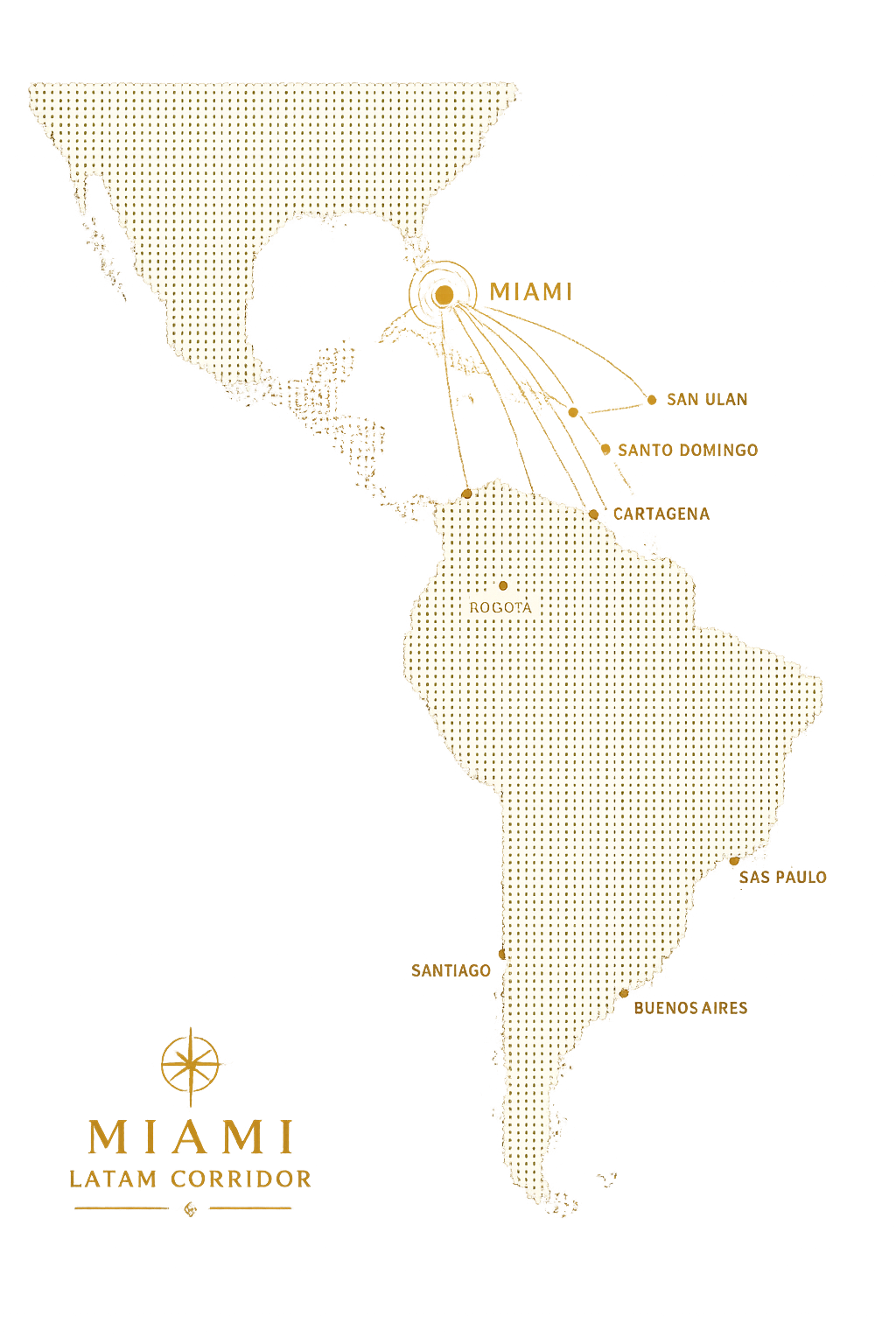
For decades, Latin American wealth followed a predictable path. It left unstable economies and found refuge in offshore accounts, New York real estate, or European assets. That model is breaking. Miami has replaced those traditional channels by offering something more efficient. Proximity, cultural alignment, legal stability, and real estate as a financial instrument.
Jorge Pérez understood this earlier than most. Through the Related Group, he transformed Miami’s skyline into a direct absorption mechanism for foreign capital. Each condominium tower became more than a building. It became a balance sheet for international wealth seeking security. What began as development evolved into infrastructure for capital preservation.
How Miami Founders Are Scaling to Eight Figures Without Venture Capital
Who Are the Most Influential Business Leaders in South Florida Right Now
Ken Griffin’s relocation of Citadel to Miami marked a different kind of signal. This was not about parking wealth. It was about moving the machinery that allocates it. When a hedge fund of that scale shifts its headquarters, it is not chasing weather. It is repositioning itself within a new financial geography. Miami is no longer downstream from capital decisions. It is where those decisions are increasingly made.
Orlando Bravo operates at another level of the system. Through Thoma Bravo, he controls one of the largest pools of private equity capital in the world, focused on software and enterprise infrastructure. His presence signals that Miami is not just absorbing wealth. It is influencing how global capital is deployed across industries.
Marcelo Claure represents the connective tissue between regions. His role in expanding SoftBank’s reach into Latin America positioned him as a translator between Silicon Valley capital and emerging market opportunity. From Miami, that bridge becomes more efficient. Deals move faster. Relationships compress. Capital finds direction.
Then there are operators like Moishe Mana, who quietly control the underlying asset that everything else depends on. Land. His long-term accumulation in Wynwood reflects a different strategy. Not reacting to capital flows, but positioning ahead of them. When the capital arrives, the leverage is already in place.
Gil Dezer took a different path by merging branding with real estate. His partnerships with global luxury names turned residential towers into status assets. For international buyers, especially from Latin America, these properties are not just homes. They are identity, liquidity, and security combined into a single instrument.
What ties these individuals together is not industry. It is function. Each plays a role in a larger system. Allocators like Griffin and Bravo direct capital. Developers like Pérez and Dezer convert it into assets. Connectors like Claure expand its reach. Operators like Mana control the physical constraints that define value.
This system is reinforced by legacy capital entering the market. Figures like Richard LeFrak and Stephen Ross represent generational wealth reallocating into high-growth regions. Their presence signals confidence, not speculation. When old capital moves, it moves with conviction.
At the same time, global players like Masayoshi Son and Peter Thiel extend the reach of this ecosystem into technology and venture capital. Their investments influence what industries will define the next phase of capital deployment. Miami becomes not just a receiver of wealth, but a staging ground for future bets.
The implications for entrepreneurs and investors are clear. This is not about chasing real estate trends. It is about understanding the structure behind them. Capital is organizing around stability, access, and scalability. Miami offers all three, with the added advantage of acting as a gateway to Latin America.
The opportunity lies in positioning within this system. Not as an observer, but as a participant. Whether through real estate, private markets, or service infrastructure, the question is no longer whether capital will continue to flow. It is how to align with the direction of that flow.
Looking ahead, the risks are equally important. Concentration of capital creates competition, pricing pressure, and potential overexposure to specific asset classes. However, the underlying drivers, geopolitical instability in Latin America and regulatory friction in traditional U.S. hubs, remain intact.
Miami’s rise is not cyclical. It is structural.
This is not about a city growing. It is about a system forming.
And those who understand that system early will not just benefit from it. They will shape it.