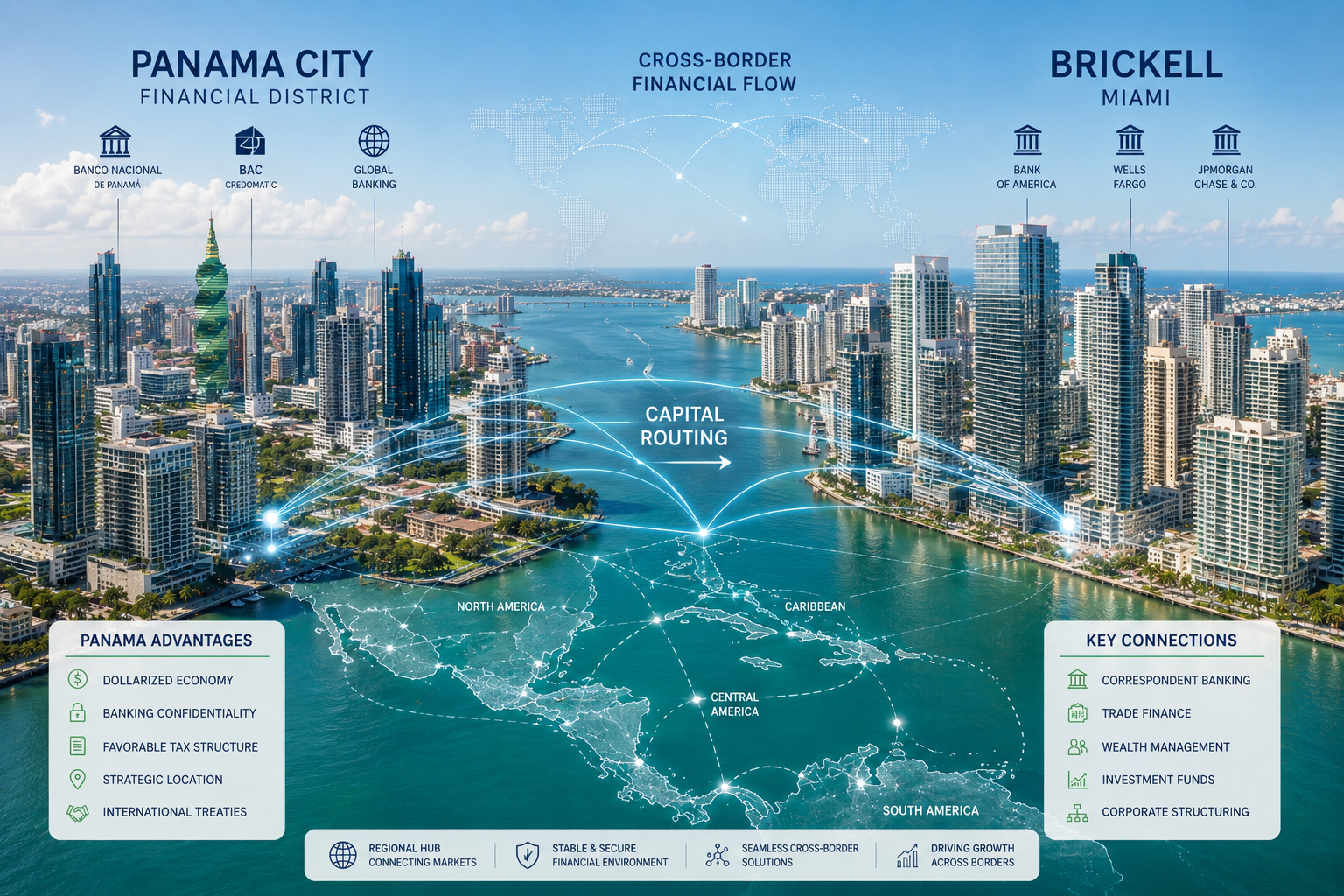


Panama’s banking regulator implemented Rule 1-2026, introducing expanded AML, digital onboarding, enhanced due diligence, geolocation verification, and fiduciary compliance standards across the country’s banking system. The framework materially updates Panama’s offshore banking infrastructure and repeals legacy compliance standards dating back to 2015.
Institutionally, the reform matters because Panama remains a critical intermediary jurisdiction for LATAM wealth routing into U.S. structures, including South Florida real estate, Delaware LLC formations, fiduciary vehicles, and family office allocations.
Strategic Context
Panama’s reforms reflect sustained international pressure tied to EU blacklist exposure and global AML enforcement escalation. The changes arrive during an increasingly compliance-sensitive environment for cross-border wealth migration, particularly among LATAM family offices reallocating assets into the U.S. and South Florida.
The inclusion of inferential geolocation standards and stricter onboarding controls signals a broader regional migration toward digitally monitored fiduciary infrastructure.
Market Impact
The rule materially affects:
- private banking onboarding
- offshore fiduciary structures
- correspondent banking relationships
- trust formation procedures
- enhanced due diligence workflows
Firms routing capital between Panama and Miami now face higher compliance costs, stronger documentation burdens, and more sophisticated transaction monitoring requirements.
Corridor Relevance
Miami’s private banking ecosystem remains deeply connected to Panamanian fiduciary and offshore structures. Rule 1-2026 directly impacts:
- Miami-based cross-border law firms
- family office structuring
- LATAM capital onboarding
- Delaware entity utilization
- Brickell private banking operations
The tightening of Panamanian compliance infrastructure could accelerate migration toward cleaner, U.S.-based structures managed directly from South Florida.
Outlook
Institutional monitoring should focus on:
- correspondent banking reactions
- EU blacklist developments
- fiduciary migration into U.S. vehicles
- increased Delaware structuring activity
- Miami-based compliance expansion
Additional regulatory harmonization remains likely through 2026 as Panama seeks removal from international monitoring lists.