

SIGNAL
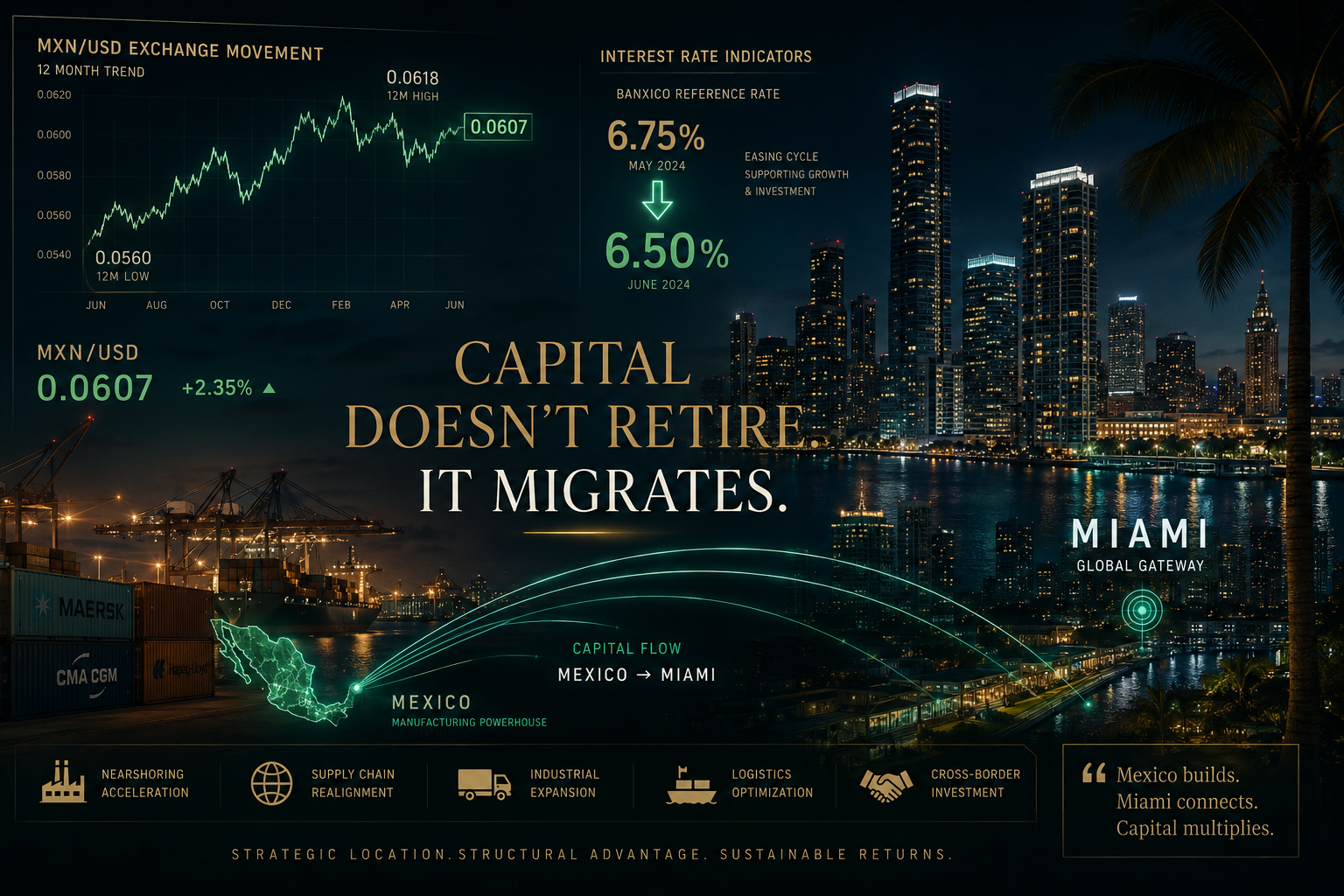
Bank of Mexico reduced Mexico’s benchmark rate by 25bps to 6.50% in a split 3–2 vote, signaling the likely end of the monetary easing cycle. Mexican headline inflation slowed to 4.45%, while core inflation declined to 4.26%. MXN carry positioning remains structurally relevant despite slowing domestic growth.
MXN/USD volatility expectations are rising as GDP contracted 0.8% in Q1 2026.
CONTEXT
Mexico spent nearly two years unwinding post-pandemic tightening. The shift now transitions from inflation containment toward growth stabilization. The decision matters because Mexico remains one of the highest-yielding institutional-grade sovereign environments in the Americas.
Miami-based Mexican operators continue reallocating into:
- South Florida commercial real estate
- Private credit structures
- Industrial nearshoring exposure
- Dollar-denominated family office holdings
The spread compression between Mexican sovereign yields and U.S. Treasuries could reduce passive inflow momentum into peso-denominated instruments over the next 6–12 months.
IMPLICATION
This is less a domestic monetary event and more a corridor liquidity signal.
Lower rates reduce financing costs for Mexican corporates operating through Miami structures, particularly logistics, import/export, and industrial manufacturing operators tied to nearshoring supply chains. However, the narrowing yield differential also weakens the “high-rate Mexico” thesis that attracted short-duration institutional capital during 2023–2025.
Expected effects:
- Increased outbound diversification into USD assets
- Higher Miami CRE acquisition appetite among Mexican principals
- Compression in MXN carry attractiveness
- Potential rise in private credit issuance
FX Snapshot:
MXN/USD: approximately 17.05 (stable to mildly weaker bias)
SCI SCORE
SCI Score: 8/9
Verifiability: 3
Capital Relevance: 2
Temporal Horizon: 3