Professional sports no longer operate as entertainment businesses alone. They function as geopolitical branding vehicles, real estate engines, private investment ecosystems, and cultural leverage platforms capable of moving billions in capital across cities, industries, and consumer markets.
Very few individuals understood that transition early enough to build around it.
David Beckham did.
His emergence this month as Britain’s first billionaire sportsman is not merely a milestone in celebrity wealth. It is evidence of a much larger transformation unfolding across global sports economics, where ownership matters more than endorsements, intellectual property compounds faster than salaries, and cultural relevance can now be converted into institutional-grade enterprise value.
The modern Beckham enterprise is no longer centered on football. It is centered on strategic asset positioning.
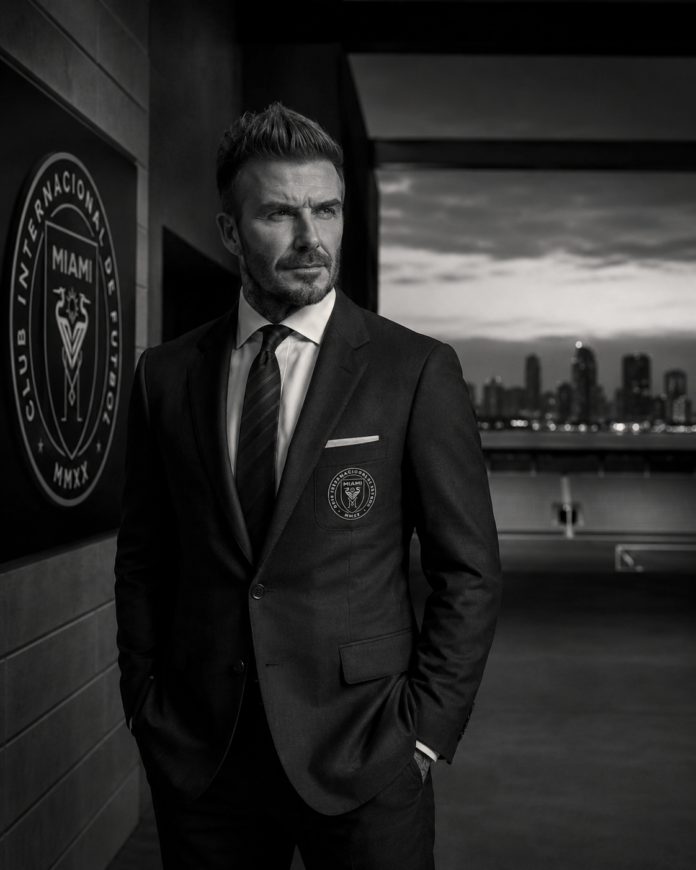
At the center of that architecture sits Inter Miami CF, arguably the most consequential sports investment in North American soccer over the past decade. What initially looked like a celebrity vanity project has evolved into something far more important: a multi-layered commercial ecosystem connecting media rights, global talent migration, luxury real estate development, tourism, sponsorship infrastructure, and international capital attention to South Florida.
That distinction matters because Beckham’s relevance today has less to do with legacy athletic achievement and more to do with his ability to sit at the intersection of culture and institutional money simultaneously.
That is a rare position.
Modern celebrity is often loud but economically shallow. Beckham built the opposite. His model operates quietly, structurally, and with long-duration strategic discipline.
The billionaire threshold simply made the machinery visible.
For years, markets underestimated Beckham because they misread him as a branding figure rather than a systems builder. But the value creation story behind his rise was never primarily about fame. It was about ownership, timing, geographic positioning, and the monetization of narrative authority across multiple industries at once.
The most important move was not his football career. It was understanding where football itself was heading commercially.
Long before American institutional capital fully embraced global soccer economics, Beckham recognized that the United States represented the sport’s largest untapped premium consumer market. Major League Soccer was still viewed as secondary infrastructure compared to Europe’s elite clubs. Valuations were modest. Global relevance was limited.
But demographics were shifting. Media consumption was globalizing. Latin American migration patterns were reshaping South Florida. International sponsorship appetite was expanding. And Miami was increasingly becoming one of the hemisphere’s most important wealth concentration hubs.
Beckham positioned himself directly inside that convergence.
David Beckham, Inter Miami, Lionel Messi, Miami sports economy, billionaire athletes, sports ownership, sports business, luxury branding, global soccer economy, MLS, Major League Soccer, Miami business, South Florida wealth, athlete investors, celebrity business empires, sports infrastructure, Miami Freedom Park, branding and capital, global wealth migration, Florida business influence, sports media rights, institutional capital, Latin America business, cultural capital, luxury markets, international branding, athlete entrepreneurship, David Beckham billionaire, Miami global influence, sports valuation, Beckham business empire, soccer business, sports finance, cross-border capital, modern wealth creation, global sports branding, entrepreneur profiles, business leadership, entertainment economy, Miami luxury economy, capital and culture
His ownership stake in Inter Miami eventually became the anchor asset around which an entire economic ecosystem formed. The arrival of Lionel Messi accelerated that transformation from ambitious MLS project into global commercial property. Messi’s move did not simply increase ticket sales. It altered franchise valuation dynamics, sponsorship pricing power, international streaming relevance, tourism demand, and regional real estate economics surrounding the club’s infrastructure footprint.
The larger signal was not sports related. It was capital related.
Miami had officially become capable of competing for globally mobile prestige assets.
That shift carries enormous implications for Florida’s future economic positioning.
For decades, cities like London, Paris, Madrid, and New York dominated the intersection of sports, luxury branding, and international wealth influence. Miami increasingly belongs in that conversation now. Beckham helped institutionalize that transition through sports infrastructure tied directly to international cultural capital.
The scale of the surrounding development reinforces the point. The Miami Freedom Park project is not merely a stadium initiative. It represents mixed-use urban asset development designed around entertainment, hospitality, retail, office space, and long-term land value appreciation.
This is where Beckham’s strategic evolution becomes most important.
He stopped operating like talent and started operating like private equity.
The distinction is fundamental.
Traditional celebrity wealth depends heavily on continued visibility. Structural wealth depends on controlling appreciating assets connected to expanding ecosystems. Beckham increasingly moved into the second category over the past decade through ownership stakes, licensing structures, intellectual property monetization, equity partnerships, and geographically strategic investments.
His sale of a major portion of DB Ventures to Authentic Brands Group illustrated that shift clearly. The deal converted personal branding into scalable institutional licensing infrastructure while allowing Beckham to retain continuing upside participation.
That is not athlete economics.
That is modern brand finance.
Equally important is how the Beckham enterprise evolved into a family-controlled commercial ecosystem rather than a personality-driven celebrity operation. Victoria Beckham transformed her fashion business from a reputation project into a profitable luxury brand with growing global commercial legitimacy.
Together, the Beckham structure now spans sports ownership, licensing, fashion, beauty, wellness, entertainment production, real estate, and consumer products.
That diversification matters because modern influence compounds fastest when it travels across industries simultaneously.
The family became a platform.
That is the real story beneath the billionaire headline.
The market increasingly rewards individuals who can function as cross-sector influence systems rather than single-category operators. Beckham’s advantage is that he occupies several forms of capital at once: athletic credibility, luxury branding legitimacy, global recognizability, institutional access, and transatlantic cultural relevance.
Very few figures possess all five.
Even fewer know how to operationalize them.
There is also a larger geopolitical layer to Beckham’s rise that deserves attention. The center of gravity in global wealth is becoming more international, more mobile, and more experience-driven. High-net-worth individuals increasingly cluster around cities capable of combining tax efficiency, luxury infrastructure, entertainment relevance, and global connectivity.
South Florida fits that model precisely.
Inter Miami’s ascent coincides with Miami’s broader transformation into a hemispheric capital corridor linking Latin America, finance, technology, hospitality, sports, and international migration wealth. Beckham did not create that shift alone, but he became one of its most recognizable commercial accelerants.
That makes him strategically important far beyond football.
He represents the fusion of cultural power and economic infrastructure now defining the next phase of global city competition.
The Empresario angle inside this story is that Beckham’s billionaire status is less about celebrity accumulation and more about the institutionalization of soft power into monetizable hard assets.
Most public figures monetize attention.
Beckham monetized ecosystem gravity.
That difference explains why his wealth expanded so dramatically after retirement rather than during peak athletic performance. Salaries rarely create dynastic wealth at this scale. Ownership does. Equity does. Infrastructure does. Intellectual property does. Geographic positioning does.
The entrepreneurs paying close attention to Beckham’s trajectory should understand that the real lesson is not branding. It is leverage architecture.
Visibility alone is unstable.
But visibility attached to infrastructure, licensing, land, partnerships, and global distribution systems becomes extremely difficult to displace.
That is how influence compounds.
The Beckham structure also demonstrates how modern wealth increasingly forms around narrative control. Inter Miami became globally magnetic not only because of Messi or football performance, but because Beckham successfully positioned the club as a luxury-adjacent cultural product connected to aspiration, lifestyle, and international relevance.
That positioning attracted sponsors, investors, celebrities, tourists, and media attention simultaneously.
Narrative became enterprise value.
This is increasingly true across nearly every modern industry. Companies, cities, founders, and institutions capable of commanding cultural attention now possess measurable economic advantages in capital attraction and valuation expansion.
Beckham understood that earlier than most athletes of his generation.
Looking forward, the next phase of his influence will likely extend deeper into institutional sports ownership, international media, luxury consumer ecosystems, and experiential infrastructure tied to global tourism and entertainment.
The broader economics also remain favorable. Soccer valuations continue rising globally. Miami’s international importance continues expanding. Cross-border wealth migration into Florida remains strong. Premium live entertainment assets are becoming increasingly valuable in an era dominated by fragmented digital attention.
All of those trends reinforce Beckham’s positioning rather than threaten it.
There are risks, of course. Sports valuations can become inflated. Media consumption patterns continue evolving rapidly. Luxury consumer spending can soften during downturns. And celebrity-driven brands often struggle through generational transitions.
But Beckham’s structure appears increasingly insulated from the volatility affecting personality-dependent businesses because it is tied to underlying infrastructure and ownership economics rather than attention cycles alone.
That may ultimately become his most important business achievement.
David Beckham spent years being underestimated precisely because markets confused polish for superficiality. In reality, he was building one of the most sophisticated athlete-to-enterprise transitions of the modern era.
The billionaire headline captures the scale of the outcome.
But the deeper story is about something much larger unfolding across Florida, global sports, and modern capital itself: the emergence of cultural infrastructure as a serious asset class.
And few individuals helped shape that transition more effectively than Beckham.