
A financial institution does not necessarily need to own the capital it serves to become influential in the way that capital moves.
Sometimes its importance comes from controlling the infrastructure around it: the relationships, regulatory framework, technology, investment access and professional networks that allow capital to move between markets. In international wealth management, that distinction has become increasingly important as wealthy families and independent investment professionals seek alternatives to the traditional private banking model.
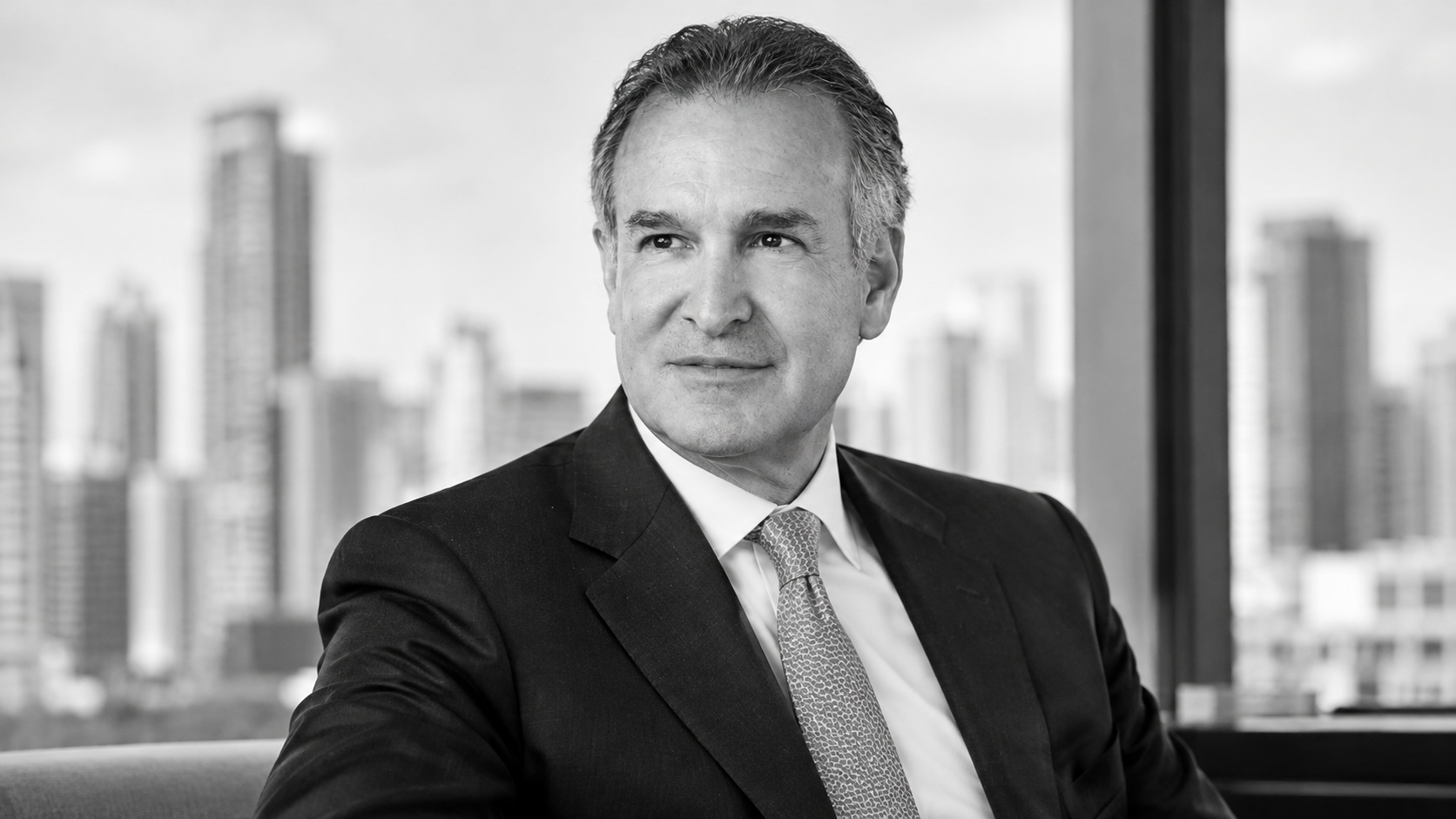
Raul Henriquez has spent four decades building businesses around that opportunity. As co-founder, chairman and chief executive of Insigneo, the Miami-based international wealth management group, he has helped assemble a platform designed to connect investment professionals serving Latin American clients with the institutional resources of the United States financial system.
The scale of the resulting business is substantial. In May 2026, Insigneo reported that it supported more than $33 billion in client assets through a network of more than 500 investment professionals, including 68 institutional firms, serving approximately 32,000 clients. Following its integration of VectorGlobal’s business, the company reported a larger asset base, with coverage in August 2026 referring to approximately $36 billion.
These figures describe more than the growth of an individual financial services company. They point to a structural development in the Americas: the emergence of independent wealth management platforms capable of operating across borders while retaining access to the infrastructure traditionally associated with large financial institutions.
Henriquez’s career provides a useful lens through which to examine that transition.
His first major business was not a wealth management firm. In 1985, he co-founded Hencorp, a financial services business that began in commodities and developed into a broader operation spanning securities and emerging markets. The business established a commercial foundation around understanding markets, serving institutional clients and building relationships across the Americas.
That experience would become relevant decades later, when the opportunity in international wealth management began to take a different form.
The traditional private banking relationship was built around the institution. Clients accessed investment products, custody, research and advisory services through a bank whose organizational structure determined the boundaries of the relationship. For international clients, particularly those with wealth distributed across multiple jurisdictions, that arrangement could offer substantial resources but also impose limitations.
The institution controlled the platform. The adviser operated within it. And the client relationship ultimately depended on the priorities of the organization providing the services.
Henriquez’s subsequent business model approached that relationship from another direction.
Rather than requiring investment professionals to build every institutional capability independently, Insigneo sought to provide a shared operating platform through which advisers and financial firms could maintain their client relationships while accessing technology, compliance, trading, investment and operational resources.
The distinction is important. It shifts the competitive proposition from selling financial products toward providing the infrastructure through which investment professionals conduct their businesses.
In that model, the adviser is not simply a distribution channel for a financial institution. The adviser becomes the central commercial relationship, supported by a larger organization operating behind the scenes.
This is what Insigneo describes as assisted independence.
The concept addresses a persistent problem in wealth management. Independent advisers may have strong client relationships and considerable investment experience, but building the institutional infrastructure necessary to operate across jurisdictions is expensive and complicated. Regulatory requirements, custody arrangements, technology, reporting and operational controls require resources that smaller organizations cannot always justify individually.
A shared platform can change that equation.
The adviser retains a degree of independence while accessing capabilities that would otherwise require a much larger organization. The platform, in turn, benefits from aggregating professionals, relationships and assets without necessarily owning every client relationship in the traditional banking sense.
The economics of the model depend on scale. More advisers create opportunities to distribute the cost of infrastructure across a larger network. More clients and assets increase the commercial value of the platform. Acquisitions can accelerate that process by bringing established relationships and operational capabilities into an existing organization.
The strategy also creates a different competitive environment for traditional financial institutions. Banks are no longer the only organizations capable of providing the institutional framework required by internationally active advisers.
Insigneo’s formation in 2017 represented an effort to consolidate that proposition. The company brought together several existing businesses and operations, including Hencorp-related activities, Global Investor Services, Alpha Capital and Northeast Securities, under a single platform.
The consolidation was not simply a branding exercise. It was an attempt to assemble the capabilities necessary to compete in a market where scale, regulation, technology and international connectivity increasingly determine the quality of financial services.
The timing was significant. International wealth management was experiencing changes in the relationship between large banks, independent advisers and clients. Some institutions were reassessing their international operations, while advisers sought greater flexibility in how they served clients with financial interests across multiple countries.
For a Miami-based company focused on the Americas, those changes created an opportunity.
Miami’s importance in this market is not explained solely by its geography. Its role comes from the concentration of financial professionals, legal and regulatory expertise, international businesses and client relationships connecting the United States with Latin America.
The city offers access to the U.S. financial system while maintaining commercial and cultural connections with markets throughout the region. For international wealth management, that combination has practical value.
An investment professional serving clients in Mexico, Colombia, Peru or Uruguay may need access to U.S.-based custody, investment products, compliance systems and international market infrastructure. A platform operating from Miami can coordinate those services while maintaining relationships with professionals who understand the markets and clients involved.
Henriquez’s business has developed around that intersection.
The company’s expansion has also required capital from outside the organization. In June 2022, Bain Capital Credit and J.C. Flowers & Co., alongside private investors, participated in a $100 million minority investment in Insigneo. The investment was intended to support the company’s growth and expansion.
That transaction is revealing because it connects two different forms of financial capital.
On one side is entrepreneurial capital, represented by a business built around a particular market opportunity and operating model. On the other is institutional private investment, which evaluates the business in terms of its ability to scale, generate returns and consolidate a fragmented industry.
The participation of established investment firms provided more than financial resources. It reflected institutional interest in the economics of international wealth management infrastructure.
The subsequent acquisition strategy demonstrated how that capital could be deployed.
In 2022, Insigneo acquired Citi’s international wealth management businesses in Puerto Rico and Uruguay. In 2023, it acquired PNC’s international wealth management business serving Mexican clients.
These transactions brought established client relationships and operations into a platform whose strategic purpose was to support international investment professionals.
The acquisitions also illustrate an important feature of consolidation in financial services: the value of an acquired business is not limited to its assets. Existing relationships, experienced personnel, regulatory capabilities and established market presence can be equally important.
A financial institution acquiring an international wealth management operation is purchasing access to a network that may have taken decades to develop.
The strategic opportunity is to integrate those relationships into a larger operating structure without undermining the trust that made them valuable in the first place.
That is a more complicated exercise than simply combining balance sheets.
It requires maintaining service continuity, aligning compliance systems, integrating technology and retaining the professionals responsible for client relationships. The commercial value of an acquisition depends heavily on what happens after the transaction closes.
Insigneo’s agreement to acquire VectorGlobal’s wealth management business in October 2025 represented another significant step in this direction. The transaction involved more than $4 billion in client assets across markets including Mexico, Chile, Colombia, Ecuador, Peru, Venezuela, the United States and Canada.
The integration was completed in 2026, adding further scale and strengthening the company’s international footprint. The transaction also extended its presence into Canada.
By August 2026, reporting on Henriquez and Insigneo referred to a platform with approximately $36 billion in assets.
The significance of these developments is not simply that one company has grown larger. It is that a Miami-based financial organization has continued to assemble relationships and capabilities across markets that have historically been served through different institutions, jurisdictions and operating arrangements.
The result is a business positioned between international wealth and the infrastructure required to manage it.
Technology has become another important component of that strategy.
As the number of advisers, clients and jurisdictions increases, the complexity of operating the platform grows. A business that relies on manual processes or disconnected systems will eventually encounter limitations in cost, service quality and operational control.
Insigneo’s investment in its Alia technology platform reflects the importance of this challenge. Introduced in 2022 and subsequently developed into Alia 2.0, the system is designed to bring more of the adviser’s daily activities into an integrated digital environment.
The objective is not technology for its own sake. It is to make the operating model more efficient and allow investment professionals to devote more attention to client relationships.
This distinction matters because wealth management remains a relationship-intensive business, even as technology changes how portfolios are administered and monitored.
The platform must provide enough automation and operational consistency to support growth without reducing the personal service that attracts clients to independent advisers in the first place.
There is also a broader institutional implication.
Technology increasingly determines which financial organizations can scale efficiently. Firms that develop integrated operating systems can potentially support larger professional networks without increasing their operational costs at the same rate.
In that sense, technology is becoming part of the competitive infrastructure of wealth management rather than simply an additional service offered to clients.
For Henriquez, the long-term opportunity lies in bringing these elements together: independent investment professionals, international client relationships, institutional resources, technology and access to global markets.
The model also reflects a change in how financial services are organized. Instead of concentrating every function within a single bank, capabilities can be distributed across specialized institutions connected through shared infrastructure.
That arrangement creates opportunities for organizations capable of coordinating the system.
It also introduces new responsibilities. Cross-border financial businesses must operate within different regulatory frameworks, maintain appropriate controls and ensure that their technology and service structures can accommodate the requirements of multiple jurisdictions.
Growth, therefore, cannot be measured only by the number of advisers or the value of client assets supported. The quality of the underlying infrastructure determines whether the platform can sustain that growth.
The distinction between an organization that distributes financial products and one that provides the institutional architecture for independent investment professionals is becoming increasingly relevant.
Insigneo’s development suggests that the latter model has found a meaningful market in the Americas.
Henriquez’s career is particularly interesting because the business has evolved without abandoning its original geographic focus. From the commodities and emerging markets operations of Hencorp to the international wealth management platform of Insigneo, the recurring commercial opportunity has been the connection between Latin American financial relationships and international markets.
What has changed is the infrastructure required to serve those relationships.
Four decades ago, the opportunity was built around market access, trading and institutional relationships. Today, it involves custody, compliance, technology, investment platforms and the coordination of independent professionals across multiple countries.
The underlying commercial question remains familiar: who will provide the services and infrastructure necessary for capital to move efficiently between markets?
The answer is no longer necessarily a traditional private bank.
As international wealth becomes more geographically distributed and investment professionals seek greater control over their businesses, platforms capable of combining institutional resources with independent relationships may occupy an increasingly important position in the financial system.
Henriquez’s contribution is not that he invented international wealth management or that he single-handedly transformed Miami into a financial center. It is that he has spent decades building an organization around a specific structural opportunity: the need for institutional financial infrastructure that remains responsive to the people managing wealth across borders.
That distinction explains why Insigneo’s expansion deserves attention beyond the company’s own growth figures.
The larger story is the evolution of financial intermediation in the Americas. Capital does not move across borders on its own. It requires institutions, professional networks, technology and regulatory structures capable of connecting investors with markets.
The organizations that provide that infrastructure may ultimately become as important to the movement of wealth as the institutions that own, manage or allocate the capital itself.
Raul Henriquez’s career offers a study in how that infrastructure is being built—and why Miami has become one of the places where the next generation of international wealth management is taking shape.