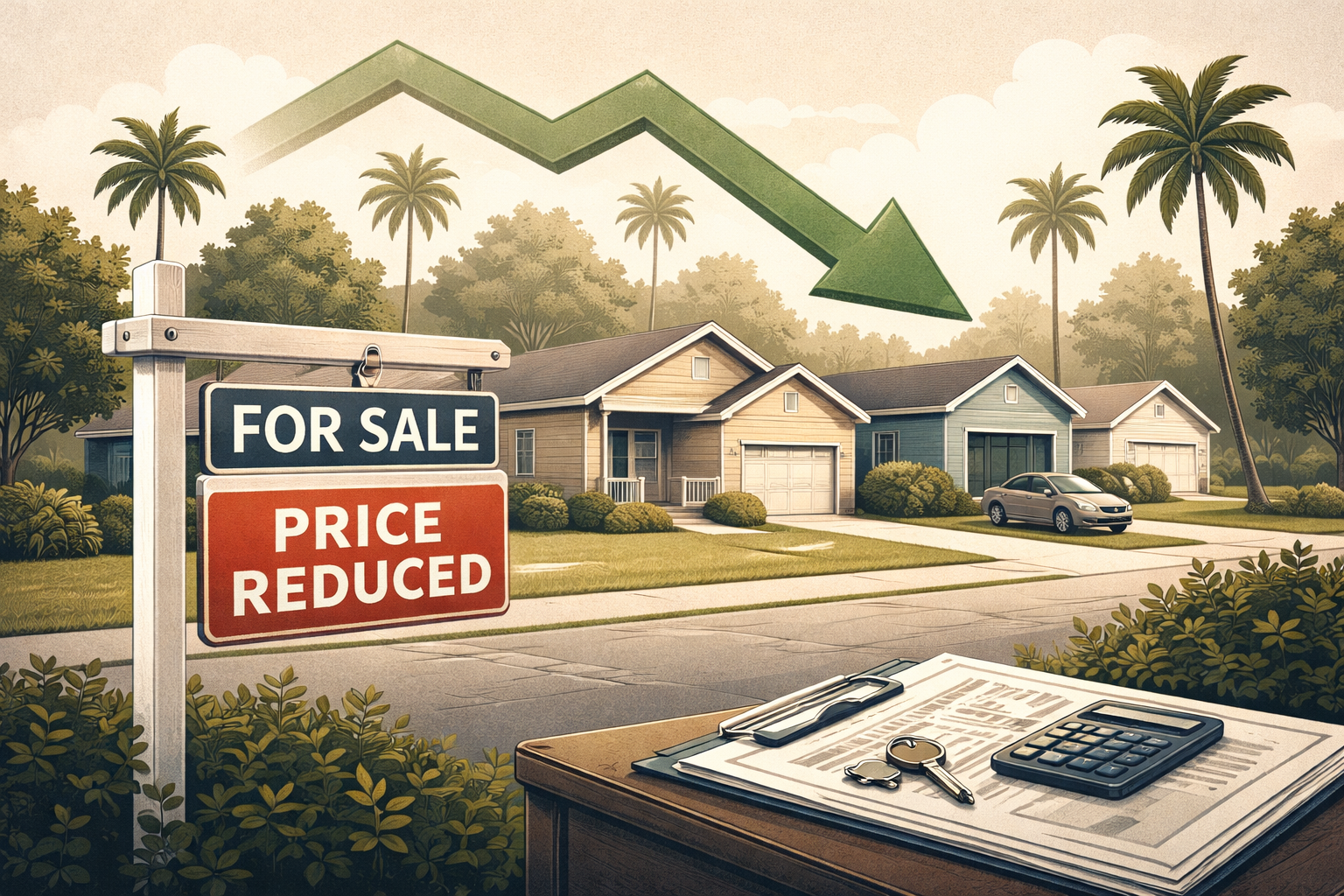


The housing market in Southwest Florida is in the midst of an unmistakable correction, with key metro areas recording meaningful price declines even as national home prices have risen modestly. Recent reporting shows that in the Punta Gorda metropolitan area, home prices have declined more than 25 percent from their July 2022 peak, and in North Port they have dropped more than 17 percent over the same period. These shifts stand in contrast to national data showing an overall increase in home values, and they underscore how regional market dynamics can diverge sharply from broader trends.
The magnitude of the price adjustments in Southwest Florida is significant because it reflects structural forces at work rather than short‑term volatility. The region experienced an exceptional run‑up in home values during the pandemic years, driven by strong demand, favorable financing conditions, and in‑migration from outside the state. That dynamic began to change in the latter half of 2022 as interest rates climbed, dampening buyer enthusiasm nationwide. In Southwest Florida, the trajectory has been particularly pronounced. The reported 25.3 percent drop in Punta Gorda and 17.4 percent drop in North Port reveal a sustained period of price correction that has now stretched more than three years since the peak.
SWFL Real Estate: Third Quarter 2025 Report
The persistence of price declines in these metros illuminates how local conditions can override broader national patterns. Since mid‑2022, while the U.S. home price index showed modest gains, markets that saw the sharpest speculative increases have been most susceptible to reversal. That divergence suggests that buyers and sellers in Southwest Florida are recalibrating their expectations. Sellers who once priced homes based on the rapid appreciation of the pandemic era now confront a reality in which supply remains elevated, buyer interest has softened, and financing costs remain elevated relative to historical norms.
The inventory picture helps explain some of the pressure on prices. As stock of available homes has risen in many markets, what had been a seller‑dominant environment has shifted toward a more balanced condition. Elevated inventory dilutes bargaining power for sellers and extends the negotiation window for buyers. In markets where homes once sold quickly with multiple offers, properties are now staying on the market longer and price adjustments have become more common. These conditions reflect a fundamental realignment of market forces rather than isolated softening.
Moreover, broader economic conditions have influenced how buyers and sellers interpret value. Mortgage rates have remained elevated compared with the historically low levels seen in early pandemic years, reducing the pool of buyers who can qualify for larger loans without stretching affordability. At the same time, labor and material costs for new construction have not retreated to pre‑pandemic levels, affecting both new supply and what existing homeowners view as replacement cost. The interaction of residual high carrying costs and softening demand contributes to a price landscape in which downward adjustments are structurally persistent.
The persistence of these price movements points to how housing markets can behave as distinct local economies with their own supply and demand balances. In Southwest Florida, additional conditions have amplified the correction. Inventory growth, partly driven by homes entering the market after storm damage or as owners reassess their insurance and maintenance costs, has contributed to a supply base that now exceeds what buyers absorbed at peak pricing. Reports from regional market analyses illustrate that condominium prices and single‑family home prices alike have trended downward, with condo prices often facing even steeper pressure.
Another structural factor influencing behavior in this region is insurance cost. In parts of Florida that have experienced significant hurricane impact in recent years, the rising cost of homeowners, wind, and flood insurance has increased the carrying cost of property ownership. Those costs are not only financial; they shape long‑term buyer confidence. When insurance premiums climb, some buyers reassess the total cost of ownership and defer purchases, while existing owners may choose to liquidate and reallocate capital elsewhere. This dynamic has a moderating effect on demand that compounds the impact of elevated mortgage rates.
The combination of higher insurance costs, elevated interest rates, and a rebalancing in supply and demand has also been evident in adjacent markets across Florida. Brokers and market analysts have observed that relative declines have been tied to these interacting pressures rather than isolated events. Where markets saw the steepest speculative gains during the pandemic, the subsequent reversals have been more pronounced. In Southwest Florida, this pattern has manifested in price adjustments that exceed the national average by a significant margin.
The implications of this correction are multifaceted. For sellers, the adjustment signals a recalibration of risk and return expectations. Homes purchased at peak pricing in 2022 now carry a lower market value, and decisions about when or whether to list reflect a calculus that weighs carrying costs, liquidity needs, and timing relative to broader regional demand. For buyers, the downward shift offers negotiation leverage but also comes amid caution about future movement in rates and the broader economic environment. It is a state of price discovery that is settling over multiple quarters rather than a transient seasonal dip.
Institutional players, including local lenders, real estate investment firms, and developers, have adjusted their strategies in response to these trends. Lenders, for example, are increasingly focused on underwriting that reflects current price levels rather than historical peaks, which influences the types of loans being approved and the price bands at which financing is available. Developers, particularly those who expanded aggressively during the previous upswing, have been repositioning their pipelines to account for slower absorption rates and a more discerning buyer base. These shifts affect how capital is allocated within the regional housing sector.
Despite the headline declines, it is important to note that prices in many parts of Southwest Florida remain above pre‑pandemic levels. The correction is relative to the extraordinary gains seen in the early 2020s, and underlying demand for coastal living continues to persist. What the current price behavior reflects is not a collapse of value but a return toward more sustainable price levels relative to local incomes and broader economic conditions. In that sense, the trajectory aligns with long‑term market normalization rather than abrupt downturn.
What has changed today is less a dramatic swing than a broader acknowledgment among market participants that the housing cycle in this region has shifted. Sellers, buyers, lenders, and developers are all adjusting expectations and behavior to align with a market in which price stability, inventory balance, and affordability questions are front and center. The observable consequences of this shift will continue to play out in housing transactions, financing decisions, and the regional distribution of capital for years to come.