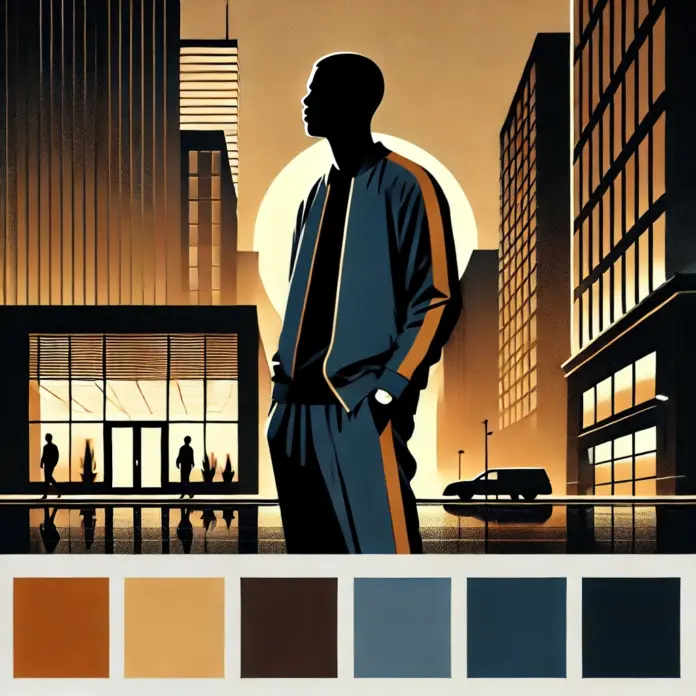
He moved through Crenshaw like a man watching time. Not chasing it — studying it. The sun hit the asphalt in long, gold streaks, stretching over the block he’d turned into a brand, a belief, a blueprint.
In a city obsessed with moments, he built for momentum. Every move deliberate, every lyric an invoice to the culture that raised him.
There was something in the way he spoke — slow, steady, surgical — like he was dictating the minutes of a meeting no one else knew was happening. While others burned bright, he burned through. The difference was intention. “It’s a marathon,” he’d say, but it wasn’t a slogan. It was strategy disguised as scripture.
He’d watched the game chew up the gifted — fast money, faster losses. But he studied the system, the labels, the leases, the percentages. And somewhere between studio sessions and street corners, he discovered the truth: ownership was the only real luxury.
He didn’t want a seat at the table. He wanted the deed to the building.
Marathon Clothing wasn’t just a store — it was a thesis on self-determination. The shelves carried more than cotton; they carried equity. Each logo embroidered like a quiet rebellion against dependency. People came to buy T-shirts but left with permission — to dream on their own terms, to walk their own marathon.
In private moments, he’d stand on the balcony of Slauson Ave, the city buzzing below like static. He’d light a joint, watch the skyline flicker, and think about the blueprint — how to build wealth that outlived applause. He knew success was a risk. But anonymity was worse.
They called him a rapper, an activist, a visionary. He called himself a student of the game. And like any good student, he took notes. Every verse, every investment, every risk — annotated with intention. Where others saw blocks, he saw balance sheets. Where others chased status, he chased structure.
There was tragedy, yes — the kind that rips the timeline in two. But legacy isn’t measured in lifespan. It’s measured in impact.
Even now, the air on Crenshaw still hums with his cadence — that blend of hustle and holiness, boardroom precision wrapped in street vernacular. His philosophy lingers in the margins of ambition: Own your narrative before someone licenses it.
Because every Empresario learns the same truth — power isn’t given; it’s branded.
The city kept moving, but his ideas stayed — repackaged as motivation, as murals, as memory. The Marathon continues — not as a slogan, but as a contract written in hustle and sealed in purpose.
He didn’t just sell music. He sold sovereignty.
He didn’t just build a business. He built belief.
And when the lights hit his mural at sunset, you realize — he never really left. He just moved higher on the skyline.