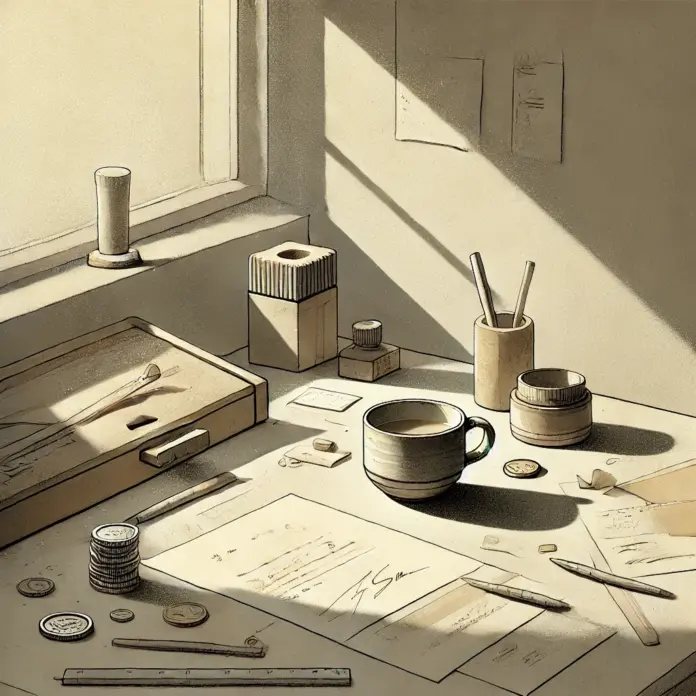
It didn’t feel like a turning point at the time. I was leaning against the counter in my small workshop, a cup of coffee cooling beside the ledger I’d scribbled in all week. The numbers were familiar, predictable. Everything made sense. Simple accounts, routine deposits, a method that had carried me this far. It was comfortable. Safe. Or so I thought.
Yet, as I traced the same lines I’d been tracing for years, a subtle unease settled in. The cash flow that once moved like a gentle stream now felt heavier, almost awkward in my hands. Every deposit, every transaction, had started to echo—not loudly, just enough to make me notice. The simplicity I relied on, the habits I had trusted, were quietly costing me more than I realized.
It’s strange how momentum feels like progress. Every hour spent, every effort repeated, gives a sense of growth. But growth has a way of stretching beyond its old boundaries. The familiar places where I once stored my earnings now seemed to magnify exposure rather than calm it. Money, effort, and energy—what had once been straightforward—now demanded more awareness than routine alone could provide.
I thought about the people I knew, operators and side-hustlers like myself, each chasing a balance between making more and protecting what they already had. We all start with the same assumptions: keep it simple, keep it steady, and let effort compound. But at some point, effort alone stops being enough. The friction between comfort and control becomes apparent, a subtle tension you only notice when the quiet moments let it in.
I remember sitting there, tracing the same familiar numbers, when the idea surfaced. Repositioning. Not loudly, not as a strategy or a plan, but as a quiet shift in posture. It wasn’t about working harder, earning faster, or finding a new stream of revenue. It was about letting what had already been earned settle into a place where it could breathe, accumulate, and quietly stack over time. A place where patience, not urgency, governed the flow.
It struck me how much of our daily assumptions are just that: assumptions. Keeping it simple worked when income and exposure were small, when effort could absorb risk and momentum carried us through. But simplicity can become its own kind of inertia. What once felt safe can quietly expose you, and the habits that made you comfortable can start to limit—not protect—your capital.
I poured another cup of coffee and watched the morning light stretch across the countertop. The quiet revealed more than any spreadsheet ever could. It whispered that some of the best moves weren’t earned with extra hours or heavier effort, but with subtle shifts, small repositionings, and attention to the spaces where money and time could finally work together.
By the time I left the workshop, nothing had changed outwardly. The accounts were still simple. The habits unchanged. Yet I carried a different sense of what simple really meant. It was no longer about being easy. It was about being right for the moment, aligned with growth that demanded discretion, control, and quiet patience. Simple was no longer safe—it was a starting point. Everything beyond it required awareness, subtlety, and the courage to reposition before the simplicity becomes a constraint.

Louie Molina is the host and architect of The Empresario. Drawing from years of financial design and strategic consulting, he created The Empresario Reserve as the ultimate repositioning strategy — a system that turns financial instruments into instruments of control.