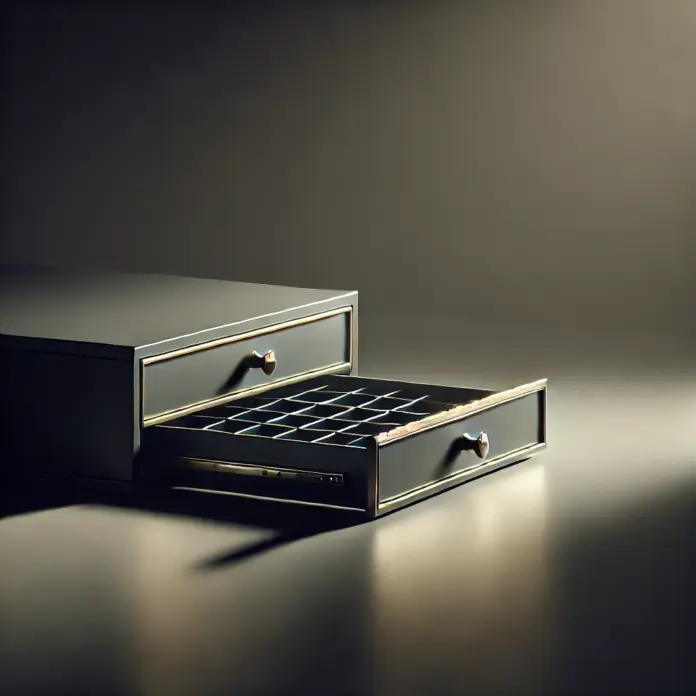
It didn’t feel like a moment at first. Just a pause in the middle of a Tuesday morning, between deliveries and emails, when she noticed the old cash drawer at the corner of the counter. Its paint was worn, the handle smooth from years of use. It hadn’t been opened in months, yet she remembered every fold of every bill inside, the subtle creases, the faint smell of paper and possibility.
She leaned against the counter, letting the quiet of the shop seep in. Outside, the street carried the usual morning hum: tires rolling over asphalt, the faint hiss of a coffee grinder from the corner café, a dog barking somewhere far enough to remain curious but not urgent. Inside, the drawer waited. She realized it had weight—not in dollars, exactly, but in something heavier, something patient.
For years, she had chased the rhythm of the shop like a metronome: the pulse of sales, the shuffle of invoices, the relentless cycle of “now, now, now.” Money moved fast then, always in motion. There was security in movement, but also exposure. Too much access. Too many chances for impulsive decisions. The drawer had been a tool, a container for liquidity. Now it felt like a mirror.
She didn’t need to open it. She didn’t need to count the bills, nor plan how to spend them, nor even imagine the possibilities. She just noticed them, still and waiting. And in that stillness, she felt the first trace of friction.
For years, she had believed effort alone was enough. Keep working. Keep producing. Keep stacking. The hours and sweat of her own hands had always delivered results. But here was something different: the effort had succeeded, the money was there, yet it had begun to ask questions she couldn’t answer at the counter. It was exposed, too easily accessed, too present. Calm was nowhere in the frame.
She thought about other people she had seen along the way. The ones who seemed composed, unhurried, almost casual in their posture toward what they’d earned. Their success didn’t shout. It didn’t move in constant motion. It waited. It accumulated quietly. There was no force behind it, only patience. Watching her own drawer, she realized how little she had understood that patience.
The thought startled her, the way certain realizations do when they sneak in sideways: maybe growth wasn’t always meant to be fast. Maybe the work that brought it into being was different from the care it now required. She remembered the old saying, one her grandfather muttered in passing: “Money that wants to move too fast often loses more than it gains.” She had ignored it then. She couldn’t ignore it now.
And yet, she did nothing. She let the drawer sit closed. Let it rest. The act of restraint was unfamiliar, but not uncomfortable. She noticed the contrast between the energy of running the shop and the quiet weight in that corner. One was noise, the other was presence. One demanded constant attention, the other waited, patient and still.
There was a subtle shift that happened without a decision. Repositioning, she thought, though the word felt awkward and foreign in her mouth. Not something she was performing. Not a strategy. Not even a thought that required a plan. Simply a recognition that the place she had chosen for her money—her effort, her growth—wasn’t the right one anymore.
She wondered how long it had been asking, waiting for acknowledgment. She hadn’t felt urgency, yet urgency had always been the companion of her work. Now, in the quiet of a drawer that hadn’t been touched, she recognized another rhythm: patience, control, optionality. The tension between access and exposure, the friction she hadn’t named, was suddenly clear.
She thought about the future in an unusual way, not as a series of tasks or deadlines, but as a landscape where time and placement could cooperate. The bills in the drawer weren’t inert; they were actors in a story she hadn’t yet learned to direct. They held possibilities that didn’t shout, didn’t demand. She didn’t need to understand them fully. She only needed to see them differently.
Closing the drawer, she noticed a calm she hadn’t expected. The shop hummed around her. The street remained busy. The dog barked, the coffee grinder hissed. She moved through her day with the same hands, the same hours, the same effort. Yet something had changed. Not in what she earned, but in how it existed. Not in the money itself, but in the posture she now held toward it.
The drawer remained in the corner, quiet and heavy, a small monument to restraint and reflection. She didn’t need to touch it again that day, or the next. The recognition was enough. And in that recognition, the first step had been taken.
She walked past it again in the afternoon, glanced down, and for a moment the idea of repositioning lingered like a whisper. She didn’t define it, didn’t plan it, didn’t name it for anyone else. She simply felt it, and that was enough. Sometimes, she realized, the right place for money isn’t the fastest, the most obvious, or the most accessible. Sometimes, it just needs to sit, heavier than before, waiting for the moment when patience itself becomes a strategy.
And she left the shop that evening thinking only this: the drawer never moved, but something inside her did.

Louie Molina is the host and architect of The Empresario. Drawing from years of financial design and strategic consulting, he created The Empresario Reserve as the ultimate repositioning strategy — a system that turns financial instruments into instruments of control.