


In the valuation of Latin American sovereign debt and infrastructure concessions, there has long existed an unwritten law: political risk eventually cannibalizes the balance sheet. Yet, for the better part of two decades, Peru has operated as a glaring, mathematically defiant anomaly. The country has cycled through eight presidents in eight years, seen multiple former chief executives jailed, and witnessed the structural erosion of its legislative branch. Simultaneously, its central bank has maintained pristine inflation targets, its debt-to-GDP ratio remains among the lowest in the region, and the national currency, the sol, is frequently described by emerging market desk heads as the “Andean dollar.”
To understand this deep structural decoupling—where macro-fiscal stability operates completely independently of executive chaos—one must look not at the occupants of the Pizarro Palace, but at the individual who transformed legislative obstruction into a predictable capital asset class.
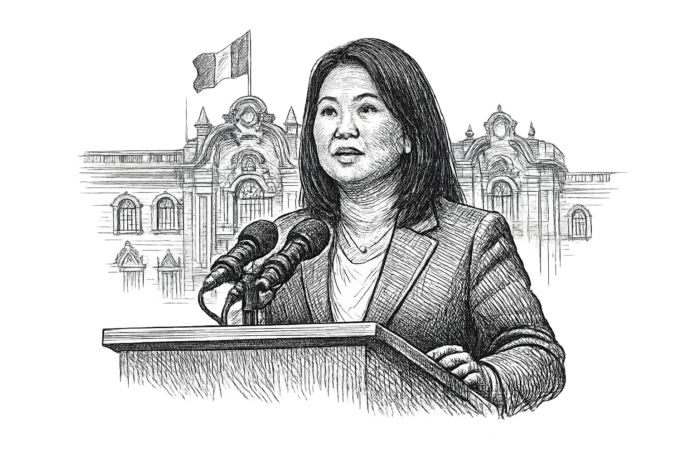
Keiko Fujimori, who secured the presidency on her fourth attempt in June 2026, has spent twenty years acting as the supreme architect of Peru’s institutional veto power. As the leader of the conservative Fuerza Popular party, her significance to international allocators and multi-billion-dollar mining consortia does not lie in her eventual ascension to the executive branch. Rather, it lies in how she built, institutionalized, and monetized an unyielding parallel governance structure that transformed political gridlock from an unpredictable hazard into a quantifiable, priced variable.
For sophisticated global funds, Fujimori represents the modern evolution of dynastic capital defense in emerging markets. Where her father, Alberto Fujimori, used state-directed shock therapy in the 1990s to forcibly insert Peru into global capital pipelines, Keiko modernized the apparatus. She recognized that in a highly fragmented, post-ideological democracy, absolute executive control is no longer required to dictate economic outcomes. By maintaining a disciplined, highly weaponized legislative minority or majority, she turned the Peruvian Congress into a clearinghouse through which any major capital deployment, regulatory framework, or tax policy had to pass.
This reality forced a structural shift in how corporate boards and family offices managed risk within the country. The traditional Latin American risk model assumes a binary outcome: either a business-friendly technocracy preserves capital incentives, or a populist wave nationalizes assets. Fujimori’s career broke this framework entirely. When Pedro Pablo Kuczynski won the presidency in 2016 on an aggressively market-orthodox platform, Fujimori’s legislative bloc systemically dismantled his cabinet, starved his infrastructure projects of legislative approval, and ultimately forced his resignation. She applied a similar structural chokehold to subsequent administrations, culminating in the swift impeachment of left-wing populist Pedro Castillo.
The second-order effect for global capital was profound. Sophisticated allocators quickly realized that the primary risk in Peru was no longer ideological expropriation, but absolute executive paralysis. Consequently, major foreign direct investments—particularly in copper, lithium, and agricultural exports—recalibrated their underwriting models. Infrastructure projects were no longer modeled against five-year presidential cycles; instead, they were engineered around the permanent legal and regulatory fortress maintained by Fujimori’s party in the capital city.
This decoupling created an asset class under intense scrutiny by global private equity and credit funds: the highly insulated, sovereign-protected concession. Because the technical management of the central bank and the ministry of finance remained deliberately ring-fenced by technocrats—a legacy arrangement designed to keep international markets calm while political factions warred over executive spoils—Peru became a laboratory for a new kind of frontier investing. Capital was allocated strictly to self-contained, highly liquid public equities or ring-fenced infrastructure projects that required minimal active state execution. Corporate balance sheets across Lima reflected this defensive positioning, aggressively cutting debt and hoarding cash to withstand a perpetual state of political transition.
Furthermore, Fujimori’s political trajectory illuminates the changing nature of cross-border capital compliance in emerging markets. Her years-long legal battle over alleged campaign contributions from the Brazilian conglomerate Odebrecht—a case dismissed on procedural grounds late last year—marks a historic turning point in the financialization of Latin American politics. The Odebrecht scandal revealed to the market that the historic method of project finance in the region, which relied on backroom capital transfers to secure state infrastructure monopolies, had run into a wall of international regulatory scrutiny.
Fujimori’s survival and eventual political triumph underscore an essential lesson for modern institutional investors: in highly volatile jurisdictions, local patronage networks that possess deep institutional staying power are far more resilient than the shifting legal architecture designed by international anti-corruption frameworks. When international compliance departments raised the bar for project finance, the price of domestic political access did not fall; it simply shifted into sophisticated parallel funding structures that insulated both the corporate allocators and the political managers from direct legal vulnerability.
Now entering office with an explicit mandate of “deregulatory shock” and strict fiscal discipline, Fujimori’s presidency represents the formal convergence of the shadow state she ran for two decades with the official executive branch. For international markets, her administration promises a temporary alignment of executive power and legislative dominance, designed to unlock stalled mega-projects in the mining and logistics sectors, most notably those seeking to pivot supply chains toward the United States and away from heavy Chinese dominance.
Yet, macro-allocators are quietly looking past the immediate business-friendly rhetoric. The true institutional question is whether the architecture of gridlock Fujimori perfected can actually be dismantled by its own creator. For twenty years, the Peruvian economy thrived precisely because the political class was too fractured to interfere with the deeply entrenched, market-friendly constitutional framework established in 1993. By concentrating both executive and legislative authority under one banner, the protective wall that separated macroeconomic stability from political theater may begin to erode.
Ultimately, Keiko Fujimori reveals a critical truth about the contemporary global capital system: in an era of hyper-fragmentation, stability is not defined by the absence of political chaos, but by the commoditization of that chaos. Wealth preservation in volatile markets no longer requires a compliant or popular state; it requires a sophisticated understanding of who holds the structural veto. Long after her administration concludes, global asset managers will continue to study her career as the definitive case study in how political risk can be transformed into a permanent, structured, and entirely predictable component of a country’s financial architecture.