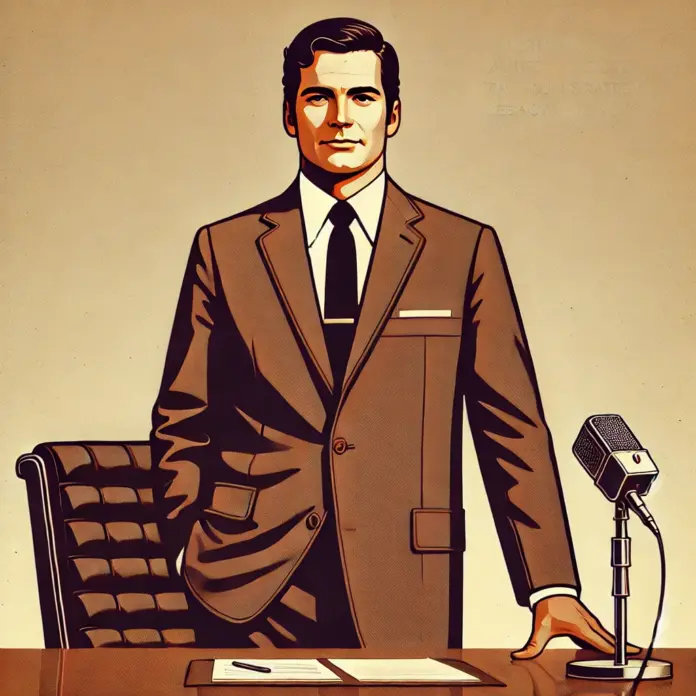
The room smelled faintly of tobacco and paper—old paper, the kind that had already been argued over, signed, regretted. Fluorescent lights hummed overhead, indifferent to history. Lee Iacocca sat alone at the table, jacket folded beside him, tie loosened just enough to suggest confidence without apology. Through the glass wall, Washington moved at its usual pace, oblivious. Men came here to beg. Iacocca came to negotiate with the country itself.
Leadership, when it’s real, rarely announces itself politely. It arrives under pressure, usually after someone else has failed spectacularly. By the late 1970s, American industry was losing its nerve. Gas lines wrapped around city blocks. Detroit was bleeding credibility. Chrysler—once proud, once loud—was considered a polite candidate for burial. And then there was Iacocca, recently fired from Ford, publicly humiliated, carrying the kind of scar that either ruins a man or sharpens him into a weapon.
He understood something most executives never quite grasp: corporations don’t die from bad numbers alone. They die when belief evaporates. When the public stops seeing itself in the product. When leadership forgets how to perform conviction. Iacocca didn’t just walk into Chrysler; he stepped into a vacuum of confidence and filled it with himself.
There’s a particular loneliness to that kind of leadership. You can feel it in old photographs—the way he stands slightly apart, shoulders squared, eyes forward. Not defiant. Calculating. He knew visibility was a currency. While other CEOs hid behind statements and committees, Iacocca went on television and spoke plainly, almost recklessly, to the American middle class. He didn’t sell cars first. He sold reassurance. We’re still here. I’m still here.
Every great operator understands the theater of power. The pauses. The angles. The moments of silence that say more than a thousand earnings calls. Iacocca leaned into that theater with surgical precision. When Chrysler needed a bailout, he didn’t whisper to bankers behind closed doors. He made it a national conversation, framing the company not as a corporate failure but as a shared American stake. Save Chrysler, and you weren’t saving a balance sheet—you were saving a piece of yourself.
The risk was personal. His name was now welded to the company’s fate. If Chrysler failed, it wouldn’t just collapse financially—it would take Iacocca’s reputation with it. That’s the difference between management and leadership. Managers diversify blame. Leaders concentrate it.
Inside Chrysler, the work was brutal and unglamorous. Costs slashed. Assumptions challenged. Old habits dragged into the light and dismantled without ceremony. Iacocca didn’t romanticize the process. He respected results more than comfort. But he also understood morale, that invisible line item executives love to ignore. He talked to workers. He showed up. He let them see the pressure on his face. Power, when shared visually, becomes loyalty.
There’s a scene executives love to skip past: the waiting. The months when nothing is certain, when every decision feels reversible and irreversible at the same time. Iacocca lived there. You can imagine him late at night, office dark except for a desk lamp, city lights fractured against the window glass. Reflection everywhere. The face looking back at him wasn’t asking for approval—it was asking for nerve.
The turning point didn’t arrive with a trumpet. It came quietly, disguised as execution. New models. Smarter positioning. A renewed sense of relevance. Chrysler didn’t just survive—it reentered the cultural conversation. The company became, improbably, a symbol of American resilience. And Iacocca became something rarer than a successful CEO: a trusted voice.
That trust was earned because he never pretended leadership was clean. He acknowledged fear without indulging it. He embraced power without apologizing for it. He understood that identity—personal and corporate—is something you shape deliberately, like an ad campaign that never stops running.
At The Empresario, we often talk about leadership as a form of authorship. You are writing a story others must believe in enough to follow. Iacocca wrote his in bold strokes, aware that subtlety is a luxury reserved for stability. When the ground is shaking, clarity becomes charisma.
In the years that followed, critics would debate his ego, his prominence, his appetite for the spotlight. They missed the point. The spotlight was the tool. He stood in it so others wouldn’t have to. That’s not vanity—that’s insulation.
Leadership, at its highest level, is a wager placed on yourself in full view of the crowd. Lee Iacocca made that wager when America was unsure it still knew how to win. He reminded the country—and corporate America—that confidence isn’t inherited. It’s manufactured, message by message, decision by decision.
He didn’t just save a car company. He sold America back to itself—one calm sentence at a time.

Louie Molina is the host and architect of The Empresario. Drawing from years of financial design and strategic consulting, he created The Empresario Reserve as the ultimate repositioning strategy — a system that turns financial instruments into instruments of control.