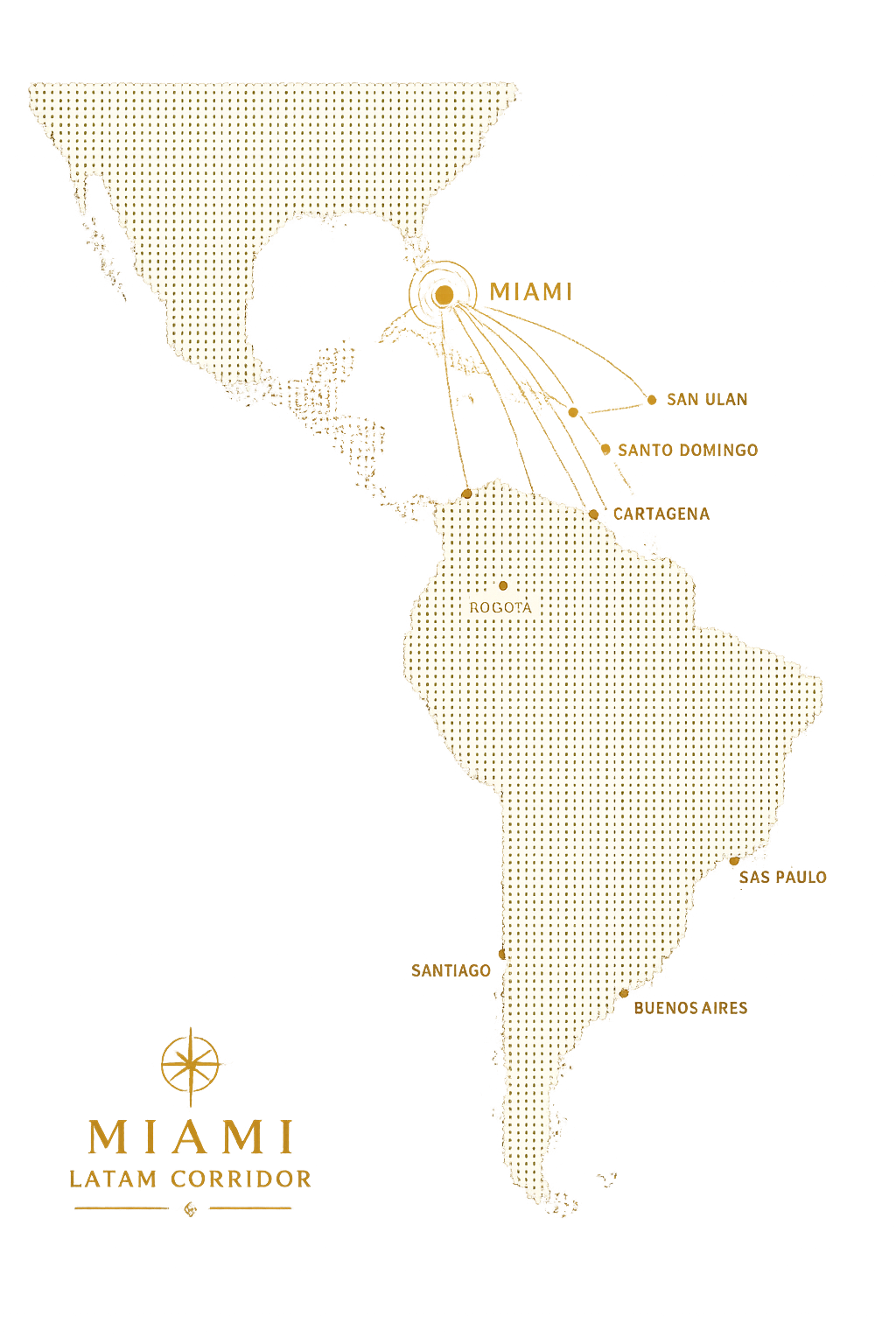

In recent months, a discernible trend has surfaced along the ever-dynamic economic corridor bridging South Florida and Latin America. We have observed an intriguing movement in capital, catalyzed by foreign corporations registering through Florida Sunbiz. As the official business entity registry of Florida, Sunbiz is the gatekeeper to the state’s thriving commercial ecosystem. And this year, the surge in registrations of foreign corporations hints at an underlying reallocation of global capital that demands our attention.
The gravity of this shift mirrors the larger resurgence of globalization post-pandemic, characterized by the fortification of cross-border economic linkages. As regulations in foreign markets evolve, multinational entities seek cosmopolitan hubs less restricted by bureaucratic entanglements. South Florida stands as a beacon; its strategic geographical position, coupled with a diverse cultural fabric, offers fertile ground for multinational corporations seeking everything from tax efficiency to an agile entrepreneurial climate.
The attributes that make Florida attractive have seldom been clearer: no state income tax, business-friendly legislation, and efficient infrastructure. However, the recent uptick in foreign entities signifies a deeper recalibration, perhaps hinting at strategic repositioning amid increasingly volatile global markets. Undoubtedly, it’s an opportune moment to dissect these movements to unearth potential opportunities.
To comprehend these movements, we interpret data straight from Florida Sunbiz, revealing that foreign corporation registrations have spiked by nearly 25% year-on-year.
This growth is significant, particularly in a sector where increment usually belies high stakes and long-term capital commitments. A vast number of these registrations hail from Latin America, underscoring the corridor’s increasing appeal amid the bolstering U.S. dollar and evolving regional economic narratives.
The countries leading these drives include Mexico, Brazil, and Argentina. These nations, despite their own economic and political challenges, perceive Florida as a steadfast opportunity for expanding corporate operations. For many firms, it represents not just an entry into the U.S. market but a recruitment of the vibrant business ecosystem that South Florida engenders.
Moreover, sectors previously dominated by Anglo-American interests, notably real estate, technology, and financial services, now feature a strong influx of LATAM players. An intriguing pattern emerges when we correlate this data with trends in commercial real estate transactions and venture capital allocations, both of which reflect a parallel increase. These shifts speak volumes about the intertwined nature of capital flows and corporate ingress.
The intrigue surrounding Sunbiz registrations extends beyond numbers; it intersects with real decision-makers and visionary entrepreneurs. Take for example, the impactful narrative of María Fernanda Rodríguez, CEO of a Bolivian pharmaceutical company making strategic inroads into the U.S. market. Under her helm, the firm has registered through Sunbiz and is poised to capitalize on Florida’s advantageous positions on both business fronts and as a gateway into broader American markets.
Fernanda’s narrative is emblematic of why foreign corporations deliberate towards Florida—her company aims at not only maximizing fiscal efficiencies but also leveraging South Florida’s premier health tech incubators, which offer innovation-hungry ventures the resources and networks needed to thrive. Her Bold pursuit exemplifies why foreign corporations, driven by strategic foresight and bold aspirations, opt for this fertile ground in the first place.
A similar testament can be found in Julio Esteban’s financial tech firm from Colombia, which seized commercialization opportunities open via Florida’s advanced fintech landscape. For Julio, Sunbiz represents more than administrative convenience; it is his venture’s inaugural foray into an expansive ecosystem tailored for growth. With ambitions to harness synergies between Latin American ingenuity and U.S. financial markets, his firm stands as a beacon to attract others of a similar ilk.
For those of us tasked with guiding our clients through the navigating transformative economic waters, the cybersecurity of this corridor’s commercial landscape presents a sea of new investment prospects. Wealth strategists should emphasize diversification strategies capitalizing on this influx of new players.
Sunbiz’s data revelations recommend a keen focus on in sectors experiencing the highest foreign inflows. Real estate continues to be paramount; however, the emergent technology and financial service offshoots also crave attention. Potential investors might consider a strategic partnership, offering capital or advisory roles within these burgeoning entities—a move that can yield robust returns and secure footholds in growing markets.
Additionally, discerning portfolios should begin recalibrating toward companies adept in bilingual management and cross-cultural acumen. Investors vested in multinational collaborations often find leveraging diverse intellectual ecosystems enhances returns.
At the vanguard, increasing awareness with our existing networks can ensure readiness to partner with incoming foreign interests, enabling our clients to integrate opinions from firsthand insights, traverse the volatilities of shifting markets, and mitigate inherent risks.
Getting deeper into the analytics behind Florida’s Sunbiz records, we uncover an overarching narrative of opportunity and risk. Foreign corporations represent not merely transactions but signify mapped avenues of growth in fluctuating marketplaces. Their decisions in choosing South Florida attest to the region’s strategic value proposition.
The influx will likely introduce heightened competition; however, it can also keep innovation thriving in sectors responsive to newly-localized foreign capital. In an environment where alliances matter, we forecast that adaptive entities with foresight and flexibility will thrive. This corridor’s future is inherently painted in broad strokes and filled with dynamic interplays of capital and ambition. Our role—navigating through these narratives, optimizing client positions, and foreseeing tomorrow’s challenges—remains formidable, yet ever-brimming with potential.
With South Florida poised at the crossroads of international commerce and ambition, it remains an epicenter of opportunity. In this unfolding chapter of economic interconnectivity, strategic navigation coupled with insightful decisions will remain paramount in transforming potential into prosperous returns.