


As South Florida cements its position as the capital of American wealth migration, yacht ownership has evolved from leisure indulgence to a defining signal of entrepreneurial power, influence, and strategic access.
South Florida is no longer simply a sun soaked playground for the affluent. It has become one of the most significant wealth migration stories in modern American history. Since 2020, thousands of high net worth individuals, hedge fund managers, private equity executives, tech founders, crypto investors, and real estate developers have relocated to Miami, Palm Beach, Fort Lauderdale, and surrounding communities. Alongside this migration has come a visible transformation of status symbols. In a region defined by waterfront property, global finance, and Latin American capital flows, yacht ownership has emerged as the ultimate business badge of arrival.
The rise of yacht ownership in South Florida is not merely about luxury. It reflects deeper economic currents. Florida has consistently ranked among the top states for inbound millionaire migration, according to data from Henley and Partners and other wealth tracking firms. Miami has positioned itself as a finance and technology hub, attracting firms such as Citadel, Blackstone, Microsoft, and numerous venture backed startups. Palm Beach has become a magnet for family offices and private investment groups. The absence of state income tax continues to draw entrepreneurs from New York, California, and Illinois.
How Private Equity Capital Is Being Positioned in South Florida
At the same time, South Florida hosts the Fort Lauderdale International Boat Show, the largest in water boat show in the world, generating more than one billion dollars in economic impact annually. The region accounts for a significant share of U.S. yacht sales and refits, with South Florida marine businesses supporting tens of thousands of jobs. According to the National Marine Manufacturers Association, recreational boating has experienced strong demand post pandemic, with Florida consistently leading the nation in boat registrations.
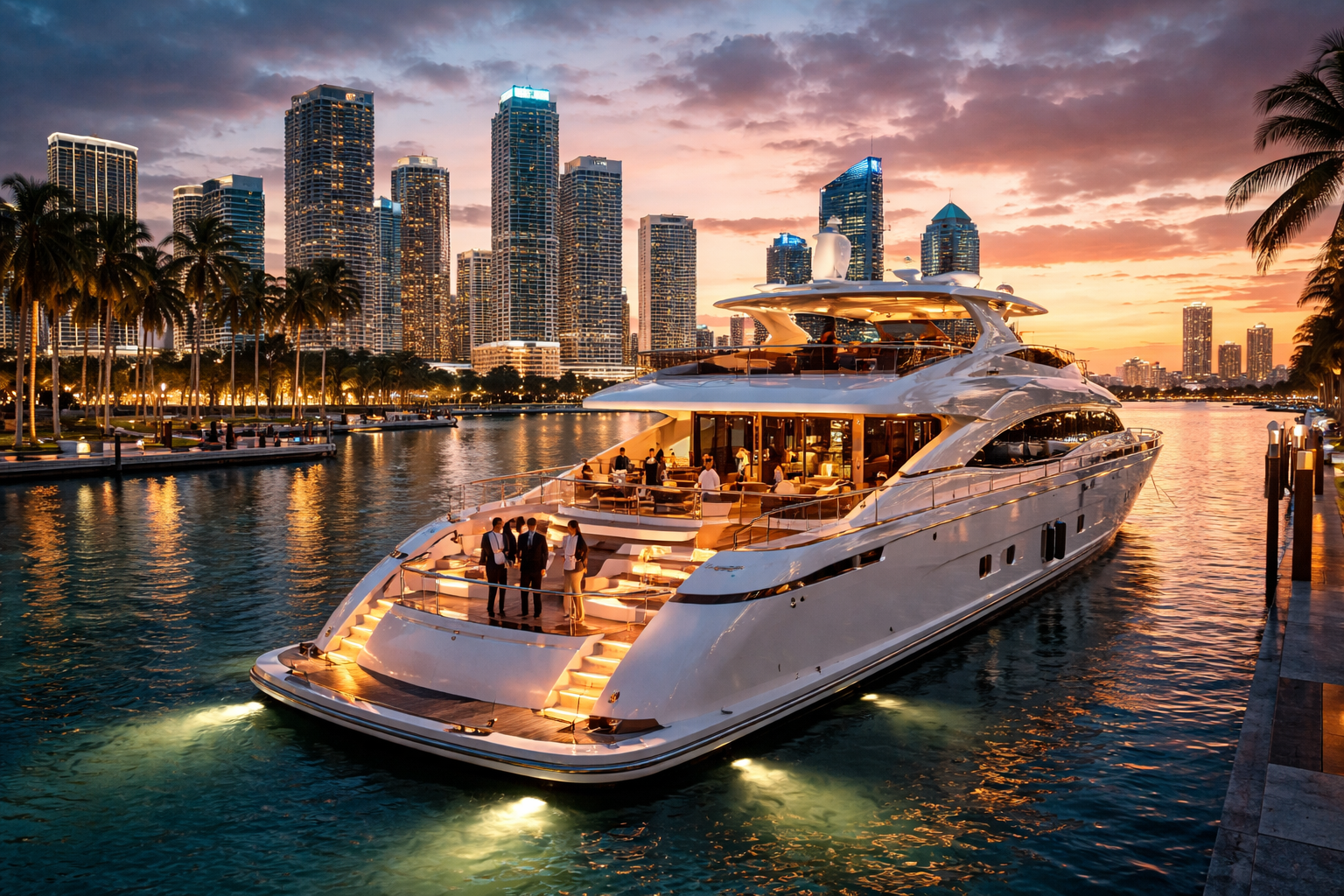
In this environment, yachts have become floating boardrooms. They are venues for private deal making, investor entertainment, and curated networking in ways that traditional office towers cannot replicate. In a coastal region where many business leaders live on the water, the yacht is not an accessory. It is an extension of the enterprise.
Consider the trajectory of Miami based real estate developer and investor David Martin, CEO of Terra. Martin has been part of the new wave of developers reshaping Miami’s skyline with high end mixed use projects and luxury residential towers. While Martin’s public persona centers on transformative urban development, like many South Florida developers he understands the symbolic and strategic power of marine culture in the region. Major developers and investors frequently host prospective partners aboard yachts during Art Basel Miami Beach, the Miami Grand Prix, and the Miami International Boat Show. In these settings, relationships are forged in private conversations against the backdrop of Biscayne Bay rather than in corporate conference rooms.
The pattern extends beyond real estate. Tech founders who relocated from Silicon Valley to Miami during the pandemic have embraced the city’s waterfront identity. Venture capital gatherings increasingly spill onto marinas in Coconut Grove and Miami Beach. Hedge fund executives in Palm Beach use yachts as discreet environments to host ultra high net worth clients from Latin America and Europe. In Fort Lauderdale, known as the Yachting Capital of the World, marine infrastructure and yacht brokerage services have expanded to accommodate larger superyachts and international buyers.
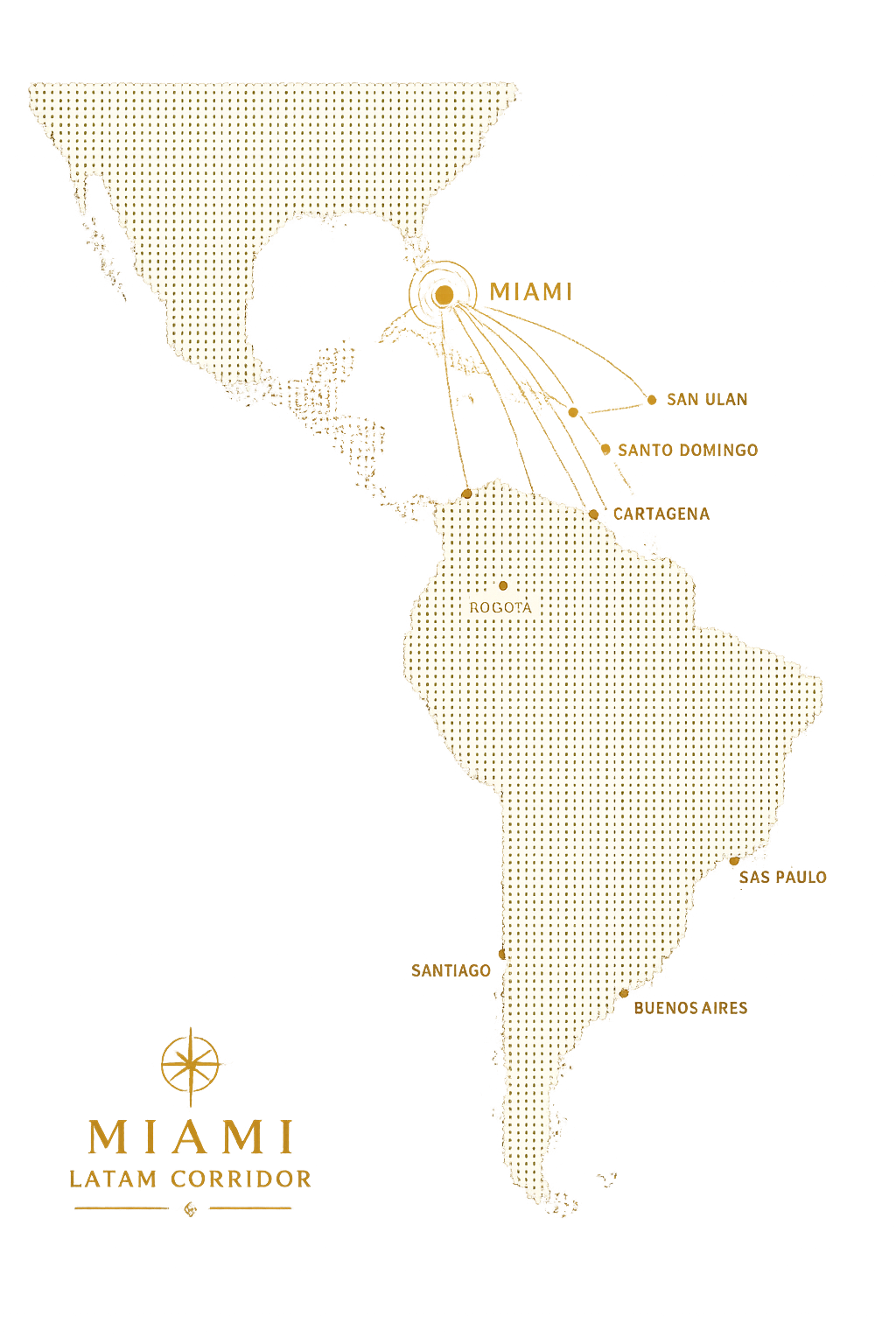
For Hispanic entrepreneurs in particular, yacht ownership carries layered symbolism. South Florida serves as a commercial bridge between the United States and Latin America. Many business leaders from Mexico, Colombia, Brazil, Argentina, and Venezuela maintain dual operations across borders. In this context, a yacht in Miami is not just leisure property. It signals international liquidity, cross border credibility, and cultural integration into the upper tiers of the American business ecosystem.
The psychology of status plays a measurable role. In global cities such as Monaco and Dubai, superyachts have long functioned as visible markers of elite positioning. South Florida now mirrors that dynamic. Dock space at premier marinas such as Island Gardens Deep Harbour or Palm Harbor Marina has become scarce, reinforcing exclusivity. The presence of a vessel during high profile events like the Miami Yacht Show or Art Basel carries reputational weight among peers.
Yet the business rationale extends beyond image. Yachts offer controlled environments for high stakes conversations. Privacy is currency at the top of the wealth spectrum. On a yacht, owners dictate the guest list, the security perimeter, and the ambiance. For entrepreneurs negotiating mergers, raising capital, or discussing confidential strategy, that control is invaluable.
There are also structural economic drivers. The marine industry in South Florida benefits from favorable tax policies, including sales tax caps on boat purchases in Florida and the absence of state income tax. The region boasts one of the world’s most advanced yacht service ecosystems, including refit yards, crew training academies, maritime law firms, and specialized insurance providers. This infrastructure reduces friction for ownership and attracts international buyers who base their vessels in South Florida waters.
At the ultra high end, superyacht purchases often exceed twenty or thirty million dollars. These acquisitions are typically structured through limited liability companies, maritime registries, and sophisticated financing arrangements. Wealth managers and tax advisors in Miami and Palm Beach increasingly coordinate marine assets as part of broader portfolio strategies. For some owners, chartering their yachts during peak seasons offsets operational costs, transforming the vessel into a hybrid lifestyle and business asset.
The strategic lessons for rising entrepreneurs are nuanced. First, asset symbolism matters in relationship driven markets. In South Florida, where image and access are intertwined, aligning with regional culture can accelerate integration into influential networks. Second, ownership decisions at scale require infrastructure awareness. Those who enter yacht ownership without understanding docking logistics, crew management, maintenance cycles, and insurance structures quickly learn that prestige comes with complexity.
Third, liquidity planning remains critical. The operating cost of a yacht often ranges from eight to ten percent of its purchase price annually, covering crew salaries, fuel, maintenance, and marina fees. Successful owners treat these costs as part of a broader wealth strategy rather than discretionary spending detached from cash flow planning.
Financial advisors in Miami increasingly counsel clients to view major lifestyle assets as components of legacy planning. Marine assets can be held within trusts or family entities, allowing multigenerational use and structured succession. For some family offices, yachts function as platforms for hosting next generation retreats, philanthropic gatherings, and strategic summits that reinforce family governance and cohesion.
Looking forward, several trends are shaping the future of yacht ownership in South Florida. Demand for larger vessels with extended cruising range has grown, reflecting the globalization of wealth. Sustainability considerations are also entering the conversation, with hybrid propulsion systems and more fuel efficient designs gaining attention among environmentally conscious buyers. Meanwhile, continued migration of finance and technology firms to Miami and Palm Beach suggests that the concentration of wealth in the region will remain strong.
There are risks. Interest rate fluctuations can influence financing structures for large purchases. Insurance costs in hurricane prone regions have risen in recent years. Marina capacity constraints may intensify as more superyachts seek permanent berths. However, the broader trajectory of South Florida as a capital magnet appears resilient, supported by demographic shifts, tax advantages, and global connectivity.
For ambitious entrepreneurs observing this phenomenon, the deeper insight is not about boats. It is about proximity. Yacht ownership in South Florida represents proximity to capital, influence, and opportunity. It reflects participation in a regional ecosystem where leisure and enterprise intersect seamlessly. Deals are discussed during sunset cruises. Investors are introduced over waterfront dinners. Cultural events spill from convention centers onto private decks.
In this environment, the yacht has become a floating signature of credibility. It signals that the owner has achieved a level of liquidity, stability, and confidence that allows business and lifestyle to converge without apology. It is a declaration of having arrived in a city that rewards boldness and visibility.
South Florida’s ascent as a global wealth hub is still unfolding. As more entrepreneurs, investors, and international families plant roots along its coastline, symbols of status will continue to evolve. For now, yacht ownership stands at the intersection of strategy and spectacle. It captures the ambition of a region that refuses to think small.
For readers of The Empresario, the message is clear. Wealth in South Florida is not merely accumulated. It is positioned. Those who understand how assets communicate power, facilitate access, and anchor relationships will navigate this market with greater precision. In a city where the horizon is always visible, the ultimate business status symbol may not be the corner office. It may be the vessel waiting at the dock, ready to carry the next great deal out to sea.