



Behind the polished dining rooms and private event salons of Miami’s most exclusive clubs, a new layer of the city’s economy is quietly being built through relationships that turn into capital, partnerships, and acquisitions.
Miami’s transformation into a global financial hub has reshaped more than its skyline. It has redefined where business actually gets done. While conference rooms in Brickell towers still host formal negotiations, a growing share of meaningful deal flow is originating inside elite networking clubs where membership is curated, access is controlled, and conversations move faster than term sheets.
Private Aviation Is Now the Go To Travel Strategy for Florida Executives
How Miami Founders Are Scaling to Eight Figures Without Venture Capital
As capital continues flowing into South Florida from New York, California, Latin America, and Europe, executives are seeking more than transactional introductions. They are looking for proximity to decision makers. In Miami, that proximity is increasingly found inside private membership clubs such as Fisher Island Club, The Bath Club, Faena Rose, The Moore, and newer invitation only business communities that blend hospitality with capital access.
The shift reflects Miami’s evolving economic identity. According to recent data from the Miami Downtown Development Authority and the Miami Association of Realtors, the region has experienced sustained growth in financial services, private equity, family offices, and venture backed technology firms since 2020. Hedge funds and investment firms have expanded local offices. Family offices managing Latin American and North American wealth have planted deeper roots. As executive density rises, so does the need for trusted, high signal environments.
Elite networking clubs are filling that role.
Unlike traditional chambers of commerce or large scale industry conferences, these clubs operate on selective membership models. The value is not volume. It is filtration. When a private equity partner sits down for dinner at Fisher Island or attends a curated investor salon at Faena Rose, the assumption is that the room contains operators, founders, and capital allocators at a comparable level.
That compression of trust accelerates deal velocity.
Consider the rise of The Moore in Miami’s Design District, which has positioned itself as a hybrid between art driven private club and business convening space. Since opening, it has hosted investor roundtables, founder dinners, and family office gatherings that bring together real estate developers, technology founders, and global investors. While not every event produces a signed agreement, participants consistently describe meaningful follow up conversations that move into structured negotiations weeks later.
Similarly, Palm Beach and Miami based family offices increasingly rely on curated club environments to source proprietary opportunities. Rather than waiting for investment bankers to circulate formal pitches, principals often encounter founders organically through club introductions. A real estate developer might meet a capital partner over a private lunch. A fintech founder might be introduced to a growth investor during a members only policy discussion.
The human layer matters.
One Miami based commercial real estate investor described closing a nine figure joint venture after an introduction that began at a private club dinner in Coconut Grove. The relationship developed over months of informal conversations before any formal underwriting began. By the time documents were drafted, alignment had already been established socially. In high trust environments, negotiation becomes refinement rather than confrontation.
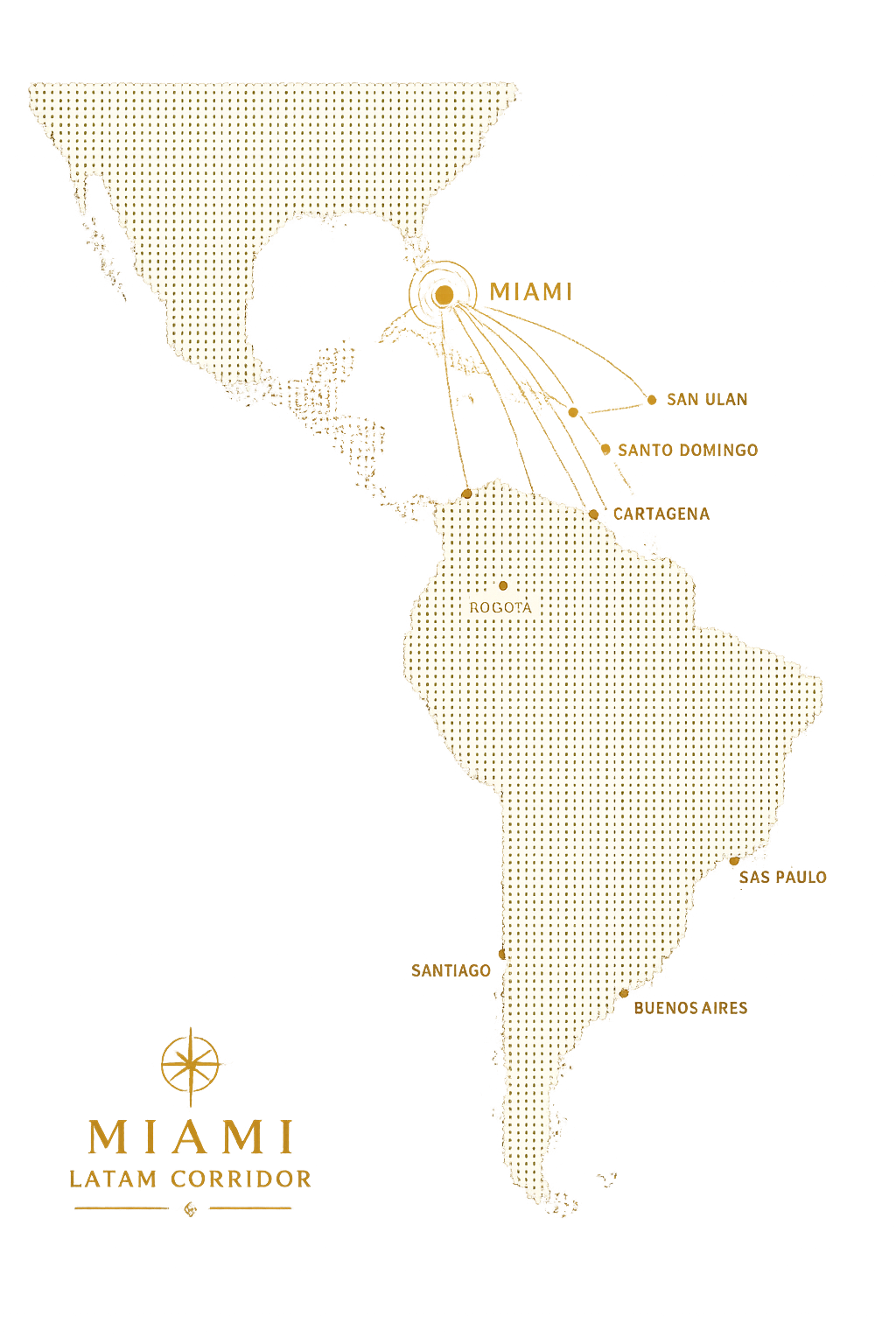
For Hispanic entrepreneurs operating between Miami and Latin America, these clubs carry additional strategic value. Miami functions as a gateway city for cross border capital. Elite membership spaces provide neutral ground where Latin American business leaders can connect with United States based investors without the formality of corporate offices. Cultural fluency combined with curated access creates powerful network effects.
The economics behind these clubs reinforce their influence. Annual membership fees often range from five figures into the six figure tier, depending on exclusivity and services. That pricing structure naturally filters participants. It signals financial capacity and seriousness. While exclusivity can raise concerns about access inequality, from a deal making perspective it creates an environment where introductions are more likely to be actionable.
Technology has also amplified the impact of these clubs. Private member apps, encrypted messaging groups, and invitation only digital forums extend conversations beyond physical events. A founder may present informally at a club gathering, then continue discussions with interested investors through secure member networks. The physical and digital ecosystems reinforce one another.
Miami’s regulatory and tax environment further enhances the dynamic. Florida’s absence of state income tax has drawn high net worth individuals relocating from high tax states. As those individuals cluster geographically in neighborhoods such as Brickell, Coconut Grove, Coral Gables, and Palm Beach, their social and professional circles naturally overlap. Elite networking clubs become convergence points where lifestyle and capital intersect.
There are risks in relying too heavily on social ecosystems for deal sourcing. Informal environments can blur due diligence boundaries. Reputation driven networks may unintentionally exclude emerging founders without prior access. Sophisticated investors still require rigorous underwriting, legal structuring, and risk management regardless of where introductions originate.
Yet the trend appears durable.
As Miami matures into a global capital hub, the traditional separation between social capital and financial capital continues to narrow. Elite networking clubs are not replacing investment banks, law firms, or formal pitch processes. They are upstream filters. They are where alignment begins before spreadsheets are exchanged.
Looking forward, the evolution of these clubs will likely mirror Miami’s broader growth. Expect more specialized communities focused on sectors such as technology, hospitality, private credit, and cross border trade. Expect deeper integration with family office networks and philanthropic initiatives. As the city attracts younger founders and next generation wealth holders, club culture may blend creative industries with institutional capital in new ways.
For entrepreneurs and investors navigating Miami’s competitive landscape, understanding where conversations originate is as important as understanding valuation metrics. The city’s most meaningful introductions are increasingly happening in rooms where membership is selective and discretion is assumed.
Deal flow in Miami no longer depends solely on cold outreach or formal conferences. It flows through curated communities built on access, trust, and proximity. In a city defined by growth and migration of wealth, elite networking clubs have become more than social venues. They are infrastructure for opportunity.