



As commercial air travel becomes increasingly unpredictable, Florida executives are turning to private aviation for speed, privacy, and strategic efficiency in a state now defined by high growth industries and global capital flows.
How Miami Founders Are Scaling to Eight Figures Without Venture Capital
South Florida’s rise as a financial and entrepreneurial powerhouse has reshaped more than skylines and balance sheets. It is quietly transforming how business leaders move. Over the past several years, private aviation has shifted from a luxury indulgence to a strategic business tool for executives operating in Miami, Palm Beach, Fort Lauderdale, and Tampa. For founders managing multi state operations, investors structuring cross border deals, and real estate developers navigating compressed timelines, private aviation is increasingly becoming the preferred travel method for Florida executives.
The shift is not cosmetic. It is structural.
According to data from the Federal Aviation Administration and private aviation analytics firms such as Argus International and WingX, private jet departures across Florida remain significantly above pre pandemic levels. South Florida consistently ranks among the busiest private aviation corridors in the United States, with Opa Locka Executive Airport, Palm Beach International, and Fort Lauderdale Executive Airport reporting sustained high volumes of corporate jet traffic. Even as commercial passenger demand has rebounded, private flight activity in key Florida markets has stabilized at elevated levels, reflecting a durable behavioral change among high income professionals.
The economic backdrop explains much of the acceleration. Florida has experienced one of the strongest net in migration trends in the country, particularly among high net worth individuals and corporate relocations. Hedge funds, family offices, technology startups, and private equity firms have established significant footprints in Miami and Palm Beach. Tampa and Orlando have expanded their appeal among defense contractors, logistics firms, and healthcare entrepreneurs. With executive teams increasingly dispersed between Florida, New York, Texas, Latin America, and Europe, time has become the most valuable currency.
Private aviation compresses geography.
A founder based in Miami can attend a morning meeting in Tampa, tour a development site in Naples by midday, and return for an investor dinner in Brickell without navigating commercial terminal delays. For executives managing operations in Puerto Rico, Mexico City, Bogotá, or São Paulo, private aircraft offer direct routes that eliminate layovers and reduce exposure to crowded hubs. In industries where deal cycles move quickly and confidentiality is paramount, those hours saved are not a convenience. They are competitive leverage.
Consider the experience of Orlando Bravo, the Miami based billionaire and co founder of Thoma Bravo, one of the largest software focused private equity firms in the world. Since relocating significant operations to Miami, Bravo has publicly championed the city as a global financial center. Executives operating at his level frequently move between portfolio companies across North America and Europe. While not every Florida executive commands a fleet, the behavior of high profile leaders has influenced broader corporate norms. Charter memberships and fractional ownership programs have become increasingly common among growth stage founders and managing partners who previously relied exclusively on commercial first class cabins.
Private aviation companies have responded aggressively to this demand. NetJets, Flexjet, Wheels Up, and VistaJet have expanded their presence in Florida markets, increasing aircraft availability and membership programs tailored to entrepreneurs. New entrants and boutique charter firms based in South Florida now market flexible jet card programs specifically to family offices and mid market CEOs. According to industry disclosures, Florida consistently ranks among the top states for new fractional ownership agreements and jet card subscriptions.
The drivers extend beyond time efficiency.
Security and discretion have become central considerations for executives operating in wealth dense regions. South Florida hosts a concentration of global investors from Latin America, Europe, and Canada. For many, privacy is not merely a preference but a strategic necessity. Private terminals, known as Fixed Base Operators, allow travelers to bypass commercial security lines and crowded boarding gates. Meetings can begin onboard. Sensitive documents remain confidential. For publicly visible entrepreneurs and investors, this level of control reduces risk exposure.
There is also a cultural component emerging within Florida’s executive ecosystem. As Miami positions itself as a capital hub rivaling traditional financial centers, the symbols of mobility and access carry signaling power. Arriving at Opa Locka or Palm Beach via private aircraft communicates operational scale and decisiveness to partners and clients. While optics alone do not justify the cost, in high stakes deal making environments perception influences negotiations.
Yet the economics of private aviation have evolved in ways that make access more attainable for a broader tier of executives. Fractional ownership allows companies to purchase a share of an aircraft rather than the entire asset, reducing capital commitment while guaranteeing flight hours. Jet card memberships lock in hourly rates without long term ownership obligations. For companies generating significant revenue or managing time sensitive assets such as real estate developments or medical practices, the cost per hour can be rationalized against productivity gains and opportunity capture.
Industry analysts note that many Florida executives do not use private aviation for every trip. Instead, they apply it strategically. High impact investor meetings, multi city site visits within tight time frames, and international routes with limited direct commercial service justify charter utilization. Routine travel may still occur commercially. This hybrid model has normalized private aviation as a practical business instrument rather than a symbol of excess.
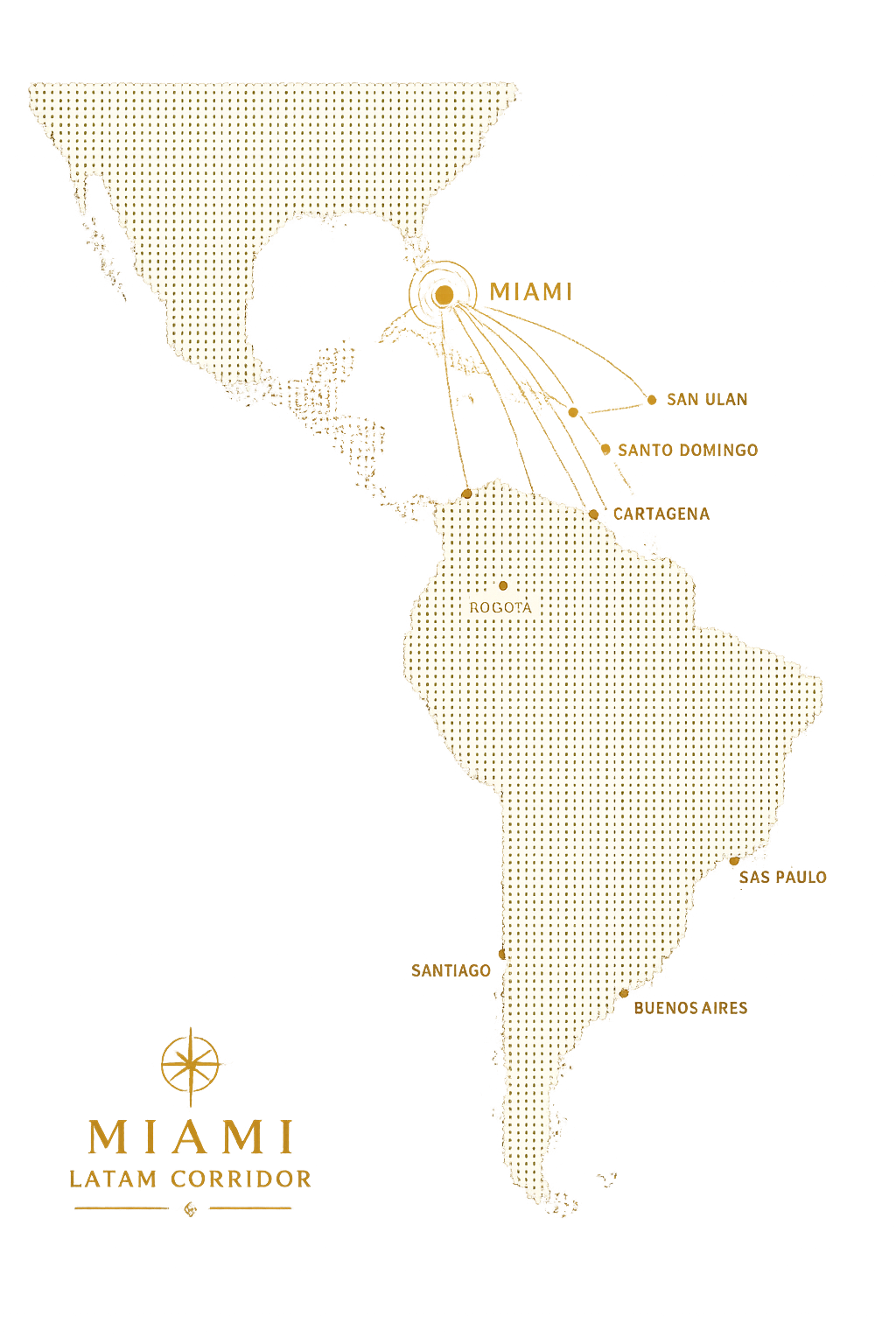
South Florida’s geographic position strengthens the case. Miami functions as the gateway to Latin America, a region with deep commercial ties to Florida based entrepreneurs. Direct commercial connectivity to certain secondary cities in Central and South America remains limited. Private aviation bridges that gap, enabling executives to visit manufacturing facilities, hospitality assets, and investment targets in a single day. For Hispanic entrepreneurs with operations spanning Miami and Latin America, the ability to move seamlessly between markets reinforces Florida’s role as headquarters.
Environmental concerns have also entered the conversation. Critics of private aviation point to higher per passenger emissions compared to commercial flights. In response, several private aviation providers have invested in sustainable aviation fuel programs and carbon offset initiatives. While these efforts do not eliminate environmental impact, they signal an awareness that long term growth of the sector must address regulatory and reputational pressures. Florida based operators increasingly promote sustainability partnerships as part of their value proposition.
Looking ahead, the infrastructure around private aviation in Florida continues to expand. Airport authorities in Palm Beach and Miami Dade have invested in terminal upgrades and capacity improvements tailored to executive traffic. Real estate developers are incorporating private hangars and aviation communities into luxury residential projects in areas such as Wellington and Naples. The convergence of real estate, wealth migration, and private aviation suggests an integrated ecosystem designed for high mobility lifestyles.
Technology is further reshaping the sector. Digital charter platforms allow executives to book aircraft with transparency on pricing and availability. Data analytics optimize fleet positioning to reduce empty leg flights, lowering costs and increasing efficiency. As artificial intelligence enhances routing and maintenance planning, operational reliability is expected to improve, strengthening private aviation’s appeal to time sensitive leaders.
Risks remain. Economic downturns historically soften demand for discretionary travel. Regulatory scrutiny around emissions or taxation could alter cost structures. Yet Florida’s underlying growth narrative appears resilient. The state continues to attract entrepreneurs from New York, California, Illinois, and international markets seeking favorable tax treatment and business friendly regulation. As executive density increases, so does the demand for mobility solutions aligned with high performance schedules.
For Florida executives, private aviation is no longer merely about comfort. It represents control over time, security of information, and strategic agility in a competitive environment. In a state where capital moves quickly and opportunities emerge across cities and continents, the ability to compress distance becomes a defining advantage.
South Florida’s skyline may symbolize financial ascent, but its runways tell an equally powerful story. The steady rhythm of corporate jets lifting off from Opa Locka and Palm Beach reflects a deeper transformation in how wealth operates. Private aviation has become embedded in the architecture of executive decision making, not as spectacle but as infrastructure.
For entrepreneurs and investors building in Florida’s expanding economy, the lesson is clear. Mobility is strategy. Those who command their time command their leverage. As private aviation becomes the preferred travel method for Florida executives, it underscores a broader truth about modern wealth creation in the state. Speed, access, and precision are no longer optional advantages. They are expectations.