



A growing wave of Miami entrepreneurs is proving that disciplined execution, cash flow strategy, and cultural capital can outperform traditional venture funding on the path to eight figure growth.
Miami is no longer simply attracting capital. It is producing it. Across Brickell, Wynwood, Doral, and Coral Gables, founders are building companies that cross eight figures in revenue without raising institutional venture capital. In a market once defined by relocation headlines and startup hype, a quieter story is unfolding. Operators are scaling on revenue, not runway. They are prioritizing ownership over optics. And they are reshaping what growth looks like in South Florida.
This shift carries weight far beyond a single metro area. Nationally, venture funding has tightened since the peak years of 2021 and 2022. Higher interest rates, investor caution, and recalibrated valuations have changed the risk equation. Many founders who once chased venture rounds are now rethinking dilution, governance control, and long term exit strategy. In Miami, that recalibration aligns with a regional culture that values autonomy, family legacy, and asset ownership.
South Florida’s business ecosystem has matured quickly. According to data from PitchBook and the National Venture Capital Association, overall venture deal volume in the United States declined significantly from its peak, even as profitable private companies continued to expand. Meanwhile, Florida has seen consistent population growth and net migration of high income households. The region benefits from no state income tax, strong real estate appreciation, and an expanding financial services presence. These dynamics create a rare environment where founders can scale through customer revenue, strategic partnerships, and private capital rather than traditional venture funds.
The result is a new model of eight figure growth.
Consider the trajectory of Miami based founder and investor Manny Medina. After building Terremark into a major data center business and selling it to Verizon for over one billion dollars, Medina launched eMerge Americas to position Miami as a global technology hub. While Terremark operated in an earlier era, its growth story reflects a principle still visible today. Revenue discipline and infrastructure focus created enterprise value long before the city became fashionable among venture investors. Medina built in a market that required profitability and operational rigor.
A more recent example can be seen in the rise of Bootstrapped software and services firms emerging from the Miami tech corridor. Companies such as Pipe, which began in Miami and introduced revenue based financing to the market, tapped into a financing structure that allows founders to access capital without surrendering equity. While Pipe itself raised venture capital, the model it popularized reflects a broader philosophy now embraced by many founders in the region. Instead of exchanging ownership for growth, entrepreneurs are monetizing predictable revenue streams and reinvesting cash flow.
Outside of technology, Miami’s consumer and ecommerce sectors tell a similar story. Founders in beauty, wellness, logistics, and digital education are leveraging direct to consumer channels, performance marketing expertise, and global supplier networks to scale quickly. Many operate with lean teams, outsourced infrastructure, and strong margins. Eight figure revenue is achieved not through blitz scaling, but through precision.
Take the case of Miami based ecommerce entrepreneur and investor Alex Mehr, co founder of MentorBox and other digital education ventures. Mehr has publicly emphasized disciplined marketing analytics and profitability over vanity metrics. His companies have scaled using paid acquisition models tightly aligned to lifetime customer value. This approach reflects a broader Miami ethos. Growth is engineered, not subsidized.
The common thread among these founders is not industry. It is capital strategy.
First, they treat cash flow as the primary growth engine. Rather than burning capital to acquire users at any cost, they align marketing spend directly with measurable return. Customer acquisition costs are scrutinized weekly. Margins are protected. Profit is reinvested.
Second, they diversify funding sources. Instead of traditional venture rounds, many rely on revenue based financing, private credit, strategic angel investors, or retained earnings. South Florida’s dense network of family offices and high net worth individuals provides access to private capital that values steady returns over rapid exits. These relationships are often built through proximity and trust rather than pitch competitions.
Third, they design businesses for ownership longevity. In venture backed ecosystems, the dominant narrative often centers on hyper growth followed by acquisition or public offering. In Miami, a significant number of founders are building for generational wealth. They are less interested in liquidity events that require relinquishing control. They structure companies to generate consistent distributions while preserving equity.
This approach requires a different operational mindset.
Scaling to eight figures without venture capital demands clarity on unit economics from day one. Founders must know precisely how much it costs to acquire a customer, how long that customer remains active, and how pricing affects retention. It also demands tight financial oversight. Miami based accounting firms report increased demand for fractional chief financial officers and advanced financial modeling among growth stage companies that have never raised institutional capital. Founders recognize that without a venture cushion, financial discipline is not optional.
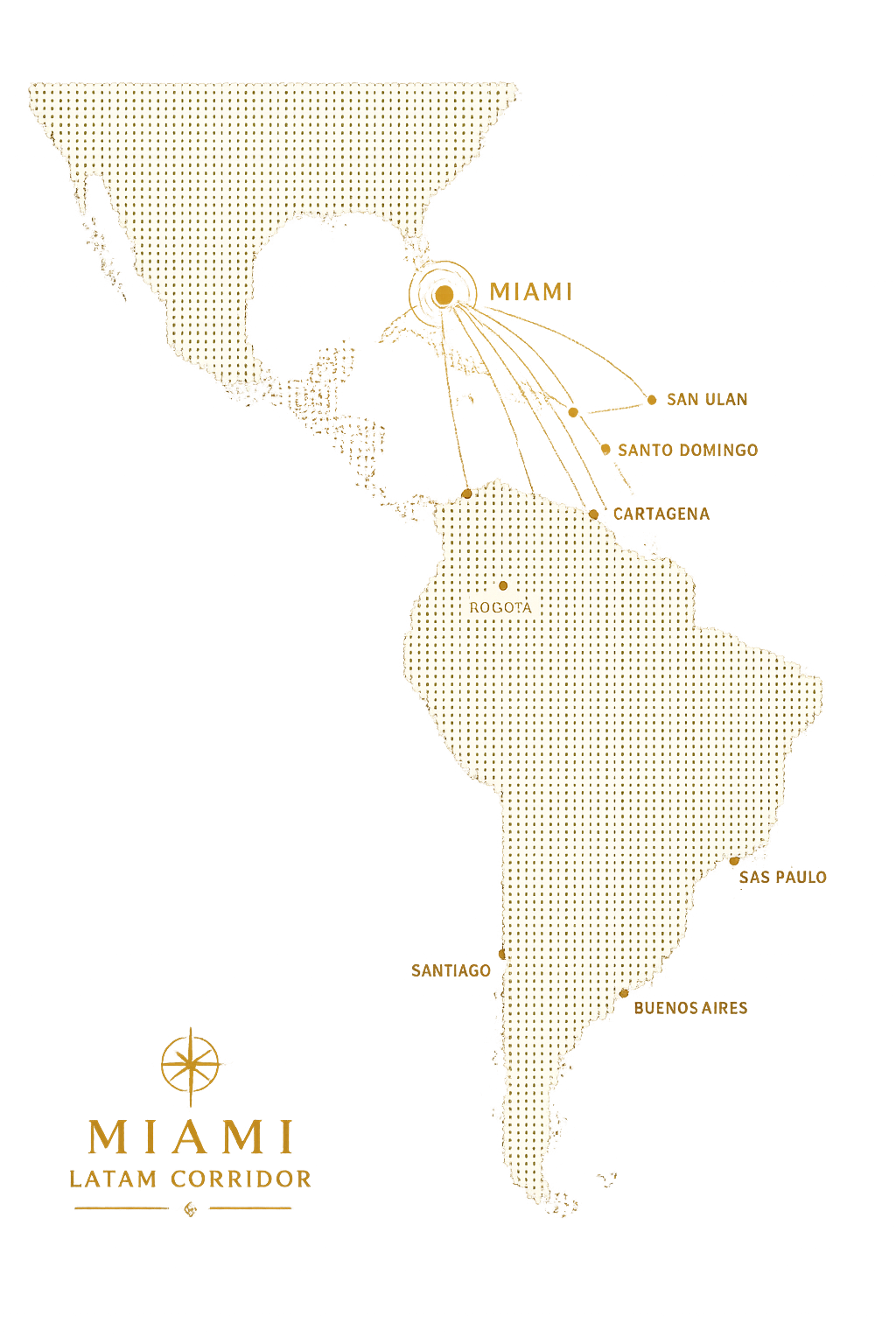
Brand positioning also plays a strategic role. Miami is uniquely positioned as a gateway to Latin America. Bilingual marketing, cross border ecommerce, and cultural fluency allow founders to tap into markets beyond the continental United States. Hispanic entrepreneurs in particular are leveraging networks that extend into Colombia, Mexico, and other major economies. This cross border advantage can accelerate revenue without requiring venture scale capital.
At the same time, the absence of venture capital does not mean the absence of ambition. On the contrary, many of these founders are deeply intentional about scale. They simply define scale differently. Instead of pursuing exponential user growth at negative margins, they pursue revenue milestones supported by profitability.
Private equity firms have taken notice. As more Miami companies cross eight figures in revenue with healthy margins, they become attractive acquisition targets. Lower leverage environments and strong cash flow profiles appeal to buyers seeking stability. For founders, this creates optionality. They can continue operating independently, take on minority growth capital, or explore majority sales from a position of strength.
There are risks in this model. Without venture capital networks, founders must build their own advisory ecosystems. Access to top engineering talent can be competitive. Rapid market shifts can strain bootstrapped companies that lack large reserves. Yet many Miami entrepreneurs view these constraints as catalysts for sharper execution.
The broader economic backdrop reinforces this mindset. Interest rates remain higher than the near zero era that fueled venture exuberance. Investors are prioritizing profitability and durable business models. Public markets reward earnings visibility. In this environment, Miami’s revenue first founders appear less like outliers and more like early adopters of a new normal.
Looking ahead, several trends are likely to shape the next phase of eight figure growth in South Florida.
Artificial intelligence tools are reducing operational overhead for small teams. Automation in customer service, marketing analytics, and supply chain management allows founders to scale output without proportionate increases in headcount. This technological leverage aligns perfectly with a capital efficient strategy.
Financial innovation will continue expanding beyond traditional venture rounds. Revenue based financing, private credit funds, and hybrid investment structures are becoming more mainstream. Miami’s financial services sector, strengthened by the relocation of hedge funds and wealth managers, creates fertile ground for alternative capital providers.
Real estate dynamics may also influence growth. As commercial and residential costs fluctuate, founders who secured property during earlier cycles may benefit from balance sheet strength. Asset ownership, long valued in South Florida, can provide both stability and borrowing capacity.
Perhaps most importantly, cultural identity will remain a differentiator. Miami’s entrepreneurial community blends American market access with Latin American resilience. Many founders come from immigrant families that value ownership, cash generation, and legacy building. This perspective naturally aligns with scaling without heavy dilution.
The narrative of startup success has long been dominated by venture funding announcements and billion dollar valuations. Yet in Miami, a parallel story is unfolding. It is measured not in funding rounds, but in revenue statements. Not in headline valuations, but in retained equity.
For investors and high income professionals observing this shift, the implications are significant. The next generation of wealth in South Florida may not be built through speculative bets alone, but through disciplined operators who compound revenue year after year. These companies may not dominate technology headlines, but they will own meaningful market share and generate durable cash flow.
Miami’s founders are redefining what ambition looks like. Eight figures in revenue without venture capital is no longer an exception. It is becoming a blueprint.
As South Florida continues to attract talent and capital, the founders who master capital efficiency will stand apart. They will control their boards, shape their timelines, and decide when or if they exit. In a market that prizes independence, that control carries immense value.
The question is no longer whether Miami can produce high growth companies. It is whether the rest of the country will recognize that the most resilient growth stories may be emerging outside the traditional venture playbook.
For those building, investing, or advising in South Florida, the lesson is clear. Revenue discipline is not a constraint. It is a competitive advantage.
Explore more insights on capital strategy, founder ownership, and wealth building across South Florida in The Empresario, where business is documented as it is being built.