
Berkshire Hathaway’s insurance operations have long been treated as a stabilizing force within global risk markets. Their scale, capital strength, and willingness to underwrite complex exposures placed them in a category apart from most peers. For years, that position allowed Berkshire to act as a provider of capacity when others hesitated. More recently, however, the company’s behavior has shifted in ways that are visible not through public declarations, but through absence.
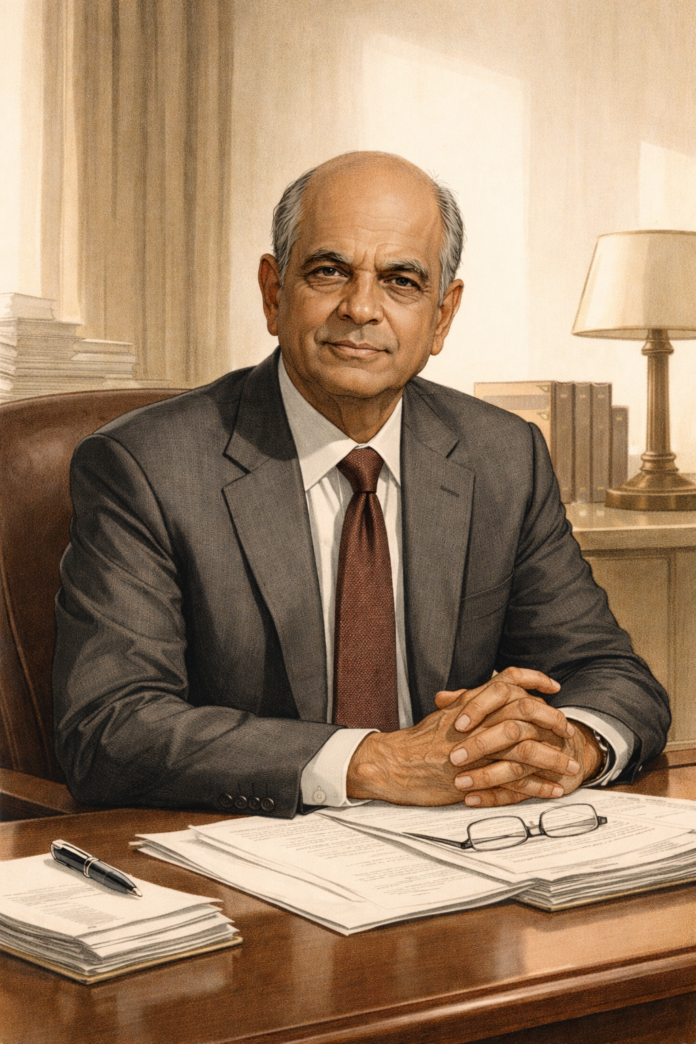
At the center of that shift is Ajit Jain, Vice Chairman of Insurance Operations at Berkshire Hathaway. His responsibilities include oversight of the company’s primary insurance and reinsurance businesses, units whose decisions affect pricing and availability well beyond Berkshire’s own balance sheet. When those units alter their appetite for risk, the consequences extend across the insurance and reinsurance markets.
Public filings and shareholder communications over the past several reporting cycles show a narrowing of underwriting participation in certain high severity catastrophe exposures. The change has not been framed as a strategic overhaul. There have been no announcements signaling a new direction. Instead, it has appeared through reduced limits, selective nonrenewals, and a willingness to step back from risks that no longer align with internal thresholds.
This matters because Berkshire occupies a unique position in the insurance ecosystem. Its reinsurance units have historically provided capacity during periods of stress, absorbing large and volatile risks that smaller carriers could not. When that capacity contracts, even modestly, the effect is not easily replaced. Other insurers and reinsurers must reassess their own exposure, often with higher pricing or tighter terms.
The context for this shift is well documented. Catastrophe losses have increased in frequency and severity, driven by a combination of climate related factors, asset concentration, and inflation in repair and replacement costs. Traditional loss models have struggled to keep pace with these changes, introducing greater uncertainty into underwriting assumptions. At the same time, regulatory capital requirements and rating agency expectations have reinforced the need for balance sheet resilience.
Berkshire’s response has been measured. Rather than exiting insurance lines entirely, the company has reduced participation where risk pricing no longer compensates for volatility. Capital has remained abundant, but less willing to accept exposure that depends heavily on assumptions no longer supported by recent experience. This approach reflects a preference for optionality over activity.
Jain’s public profile offers little insight into these decisions. He is not a frequent presence in interviews or industry panels. His commentary tends to appear in the formal language of shareholder letters, where underwriting discipline and loss experience are discussed without emphasis or flourish. What can be observed instead is behavior. Capacity offered at renewal changes. Limits tighten. Certain risks are declined altogether.
The insurance market is acutely sensitive to such signals. When a carrier of Berkshire’s scale reduces its participation, others take note. Reinsurance pricing adjusts, often upward. Primary insurers reevaluate their own retention levels. Brokers recalibrate placement strategies. None of this requires public explanation. The mechanics operate quietly, through contracts and renewals rather than statements.
Inside Berkshire, insurance serves a structural function that extends beyond underwriting profit. Insurance float, generated from premiums held before claims are paid, provides a significant source of capital. Preserving the quality of that float requires restraint during periods when loss volatility threatens its stability. In this framework, declining business can be as consequential as writing it.
Recent reporting has highlighted how higher interest rates have increased the value of float as an investment resource, while also raising the cost of mispriced risk. Losses incurred today can erode not only underwriting results, but future capital flexibility. This reality places greater weight on underwriting judgment, particularly in catastrophe exposed lines where outcomes are increasingly difficult to model.
Berkshire’s actions suggest a recalibration rather than retreat. The company continues to participate in insurance markets, but with narrower parameters. By repositioning exposure away from certain catastrophe driven risks, it has preserved capital while allowing pricing and terms elsewhere in the market to adjust. The decision did not require persuasion or signaling. It relied on discipline.
The effects of this posture have been observable in renewal cycles. Capacity for large catastrophe programs has become more constrained. Pricing has reflected higher perceived risk. Some cedents have retained more exposure, while others have sought alternative structures. These are not speculative outcomes. They are documented responses to reduced availability from major providers.
What distinguishes Berkshire’s role in this environment is not speed or innovation, but patience. The company has the ability to wait. It does not need to deploy capital simply because it exists. That patience, exercised through underwriting restraint, carries influence precisely because it is not accompanied by commentary.
Jain’s stewardship illustrates a broader truth about insurance at scale. The most consequential decisions often involve saying no, or at least not now. In markets where participants are accustomed to capacity expanding and contracting with cycles, sustained restraint from a dominant player introduces a different kind of pressure. It forces repricing, reassessment, and, in some cases, withdrawal by others.
There is little indication that this approach is temporary. Shareholder communications continue to emphasize underwriting discipline and caution in the face of uncertain loss trends. The absence of aggressive redeployment suggests that Berkshire is prepared to remain patient until conditions justify broader participation.
In an industry that often relies on forecasts and forward looking statements, the clarity here comes from action. Capacity offered, or withheld. Limits adjusted. Risks declined. These decisions speak without explanation, shaping markets through consequence rather than narrative.
Ajit Jain’s influence, then, is not a matter of visibility. It resides in the cumulative effect of choices made quietly, through contracts rather than commentary. In insurance, that form of influence is often the most durable.