

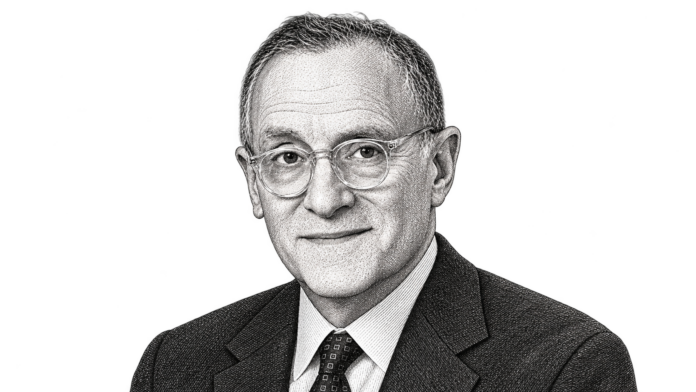
In the late 1970s, when traditional fiduciaries treated below-investment-grade debt as an unbankable asset class reserved for speculative gamblers, Howard Marks made a structural calculation that would fundamentally re-architect institutional credit allocation. At TCW, and later through the founding of Oaktree Capital Management in 1995, Marks recognized that institutional investors were making a fatal analytical error: they were confusing the risk of an underlying issuer with the risk of a financial instrument. A low-quality company, if purchased at a sufficient discount to its liquidation or reorganizational value, could constitute a high-quality, low-risk investment. By systematically purchasing non-investment-grade obligations from forced sellers bound by rigid investment mandates, Marks did not merely build a high-yield investment desk; he built the liquidity bridge that enabled high-yield credit and distressed debt to transition from the periphery of high finance to a core pillar of global alternative asset management.
The systemic significance of this pivot extends far beyond the impressive internal rates of return achieved by Oaktree over three decades. Before Marks and his cohort institutionalized the distressed debt ecosystem, corporate reorganizations were predominantly bank-led, slow-moving workouts governed by bilateral lending relationships and legal stagnation. Debt defaults routinely resulted in liquidation or destruction of enterprise value because traditional institutions possessed neither the legal standing, the mandate, nor the analytical machinery to hold non-performing paper. Marks helped pioneer a market infrastructure in which distressed debt was transformed into a liquid, tradeable proxy for corporate control.
By acquiring senior debt claims at pennies on the dollar, institutional capital could bypass traditional equity valuations, assert control during Chapter 11 proceedings, and emerge from bankruptcy holding clean, low-leverage equity in restructured enterprises. This “debt-for-control” framework permanently altered corporate governance and bankruptcy finance, turning financial distress into a standardized liquidity trade rather than an operational dead end.
What separates Marks’ institutional framework from traditional value investing is his approach to market psychology and probability. In a financial system increasingly obsessed with macro-economic forecasting and algorithmic precision, Marks articulated a philosophy grounded in epistemological humility: the recognition that while the future is inherently unknowable, the present market temperature is entirely measurable. The core of his investment discipline relies on diagnosing where market participants sit on the pendulum between greed and fear, and pricing capital accordingly. When risk aversion is high, capital is scarce, and asset prices reflect worst-case scenarios, the prospective return per unit of risk reaches its maximum.
Conversely, when capital availability is abundant and underwriting standards deteriorate, systemic risk expands rapidly even if current economic indicators appear pristine. Oaktree’s capital deployment model operates as a macroeconomic counter-weight—absorbing non-performing assets when traditional liquidity dries up, and distributing capital back into public markets when risk tolerance becomes reckless.
This methodology turned Oaktree into the premier capital provider of last resort during major financial dislocations. The institutional proof of this model was demonstrated during the 2008 global financial crisis. As credit markets seized completely and traditional banking institutions retreated to repair their balance sheets, Oaktree deployed tens of billions of dollars into distressed corporate paper at unprecedented speed. Where the broader market saw systemic collapse, Marks saw an extreme dislocation between market pricing and liquidation recovery values. By deploying capital when capital was at its most scarce, Oaktree harvested extraordinary risk-adjusted returns while simultaneously injecting critical liquidity into frozen capital markets. This intervention highlighted a broader structural shift in modern capitalism: the migration of risk-bearing capacity from regulated commercial banking balance sheets to specialized, long-term private capital vehicles.
To understand Marks’ place in the modern financial ecosystem is to understand the rise of permanent and semi-permanent capital structures within alternative asset management. Traditional private equity firms built empires through financial engineering and operational leverage—buying performing businesses and expanding debt multiples to boost return on equity. Marks and Oaktree approached the enterprise value equation from the opposite direction. By focusing on balance sheet restructurings, deleveraging, and bargain-purchase entry points, they established a model where returns were generated at the point of purchase rather than through speculative top-line expansion or multiple inflation. This focus on downside protection—what Marks famously summarizes as “if we avoid the losers, the winners will take care of themselves”—redefined the mandate of institutional fiduciaries, proving that asymmetric return profiles could be systematically achieved without taking equity-like volatility risks.
The evolution of Oaktree’s organizational model also reflects the broader consolidation and financialization of the alternative asset industry itself. In 2019, Brookfield Asset Management acquired a majority stake in Oaktree, creating an asset management powerhouse spanning private equity, real estate, infrastructure, and distressed credit. This transaction signaled the end of the boutique era for credit alternative managers, giving rise to multi-asset conglomerates capable of offering sovereign wealth funds, pension plans, and family offices comprehensive, global capital allocation across the entire liquidity spectrum. Yet, even within a multi-trillion-dollar institutional umbrella, the intellectual framework established by Marks remains intact: credit investing is not an exercise in predicting corporate success, but an exercise in calculating price-to-value disparities under conditions of market stress.
In the contemporary financial landscape, where private credit has expanded into a multi-trillion-dollar asset class competing directly with syndicated loan markets and investment banks, Marks’ foundational principles face a new macro environment. Decades of zero-interest-rate policies and quantitative easing altered the natural credit cycle, compressing spreads and incentivizing covenant-lite debt structures that eliminate traditional default triggers. As public and private credit markets blur, the mechanisms of distress have become more complex, involving liability management transactions, creditor-on-creditor violence, and out-of-court reorganizations. In this shifting regime, the traditional distressed debt playbook of waiting for a clear Chapter 11 filing is being replaced by sophisticated, trench-warfare capital structures. Yet, the core thesis underlying Marks’ life work remains unchanged: risk is not a function of asset quality, but of price paid, and market cycles are ultimately driven by human psychology rather than financial models.
Ultimately, Howard Marks’ legacy is not merely the creation of a premier credit platform or a series of widely read memos that demystify market cycles for generations of investors. His true contribution lies in revealing how capital behaves under conditions of structural stress. He demonstrated that markets require dedicated capital mechanisms specifically designed to absorb distress, reprice failed balance sheets, and reallocate productive economic assets back into the hands of viable operators. By transforming non-investment grade debt from a pariah asset class into a structured, institutional discipline, Marks did not just profit from market inefficiencies—he helped build the financial shock absorbers that stabilize modern credit capitalism. Sovereign funds, pension funds, and institutional allocators no longer view credit simply as a vehicle for fixed income yield, but as a dynamic spectrum of risk and control, capable of generating equity-like returns through disciplined downside protection. Modern finance does not manage risk by attempting to eliminate it; it manages risk by pricing it correctly—a shift in institutional consciousness engineered in large part by Howard Marks.